I don’t think I missed the Sun, but I definitely missed being able to see things. About a week ago, we celebrated the Polar Sunrise and welcomed the onset of the Midnight Sun. Our brief period of day will become longer and longer until it will stay in the sky 24/7 for the next 6 months.
The official definition of Midnight Sun is when the sun in the Arctic Circle and Antarctic Circle remains visible at midnight. Up here in the North, the sun will move left to right in the sky – it is currently right over the Winchester Hills mountain range creating a picturesque horizon, and in the Antarctic, it moves right to left.
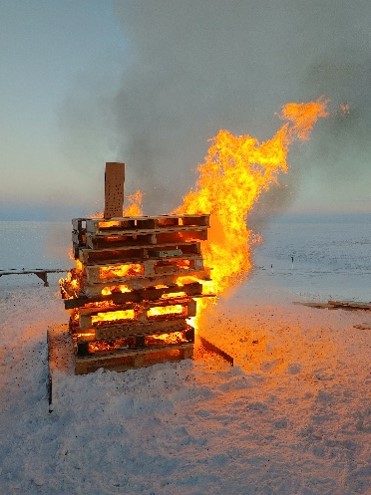
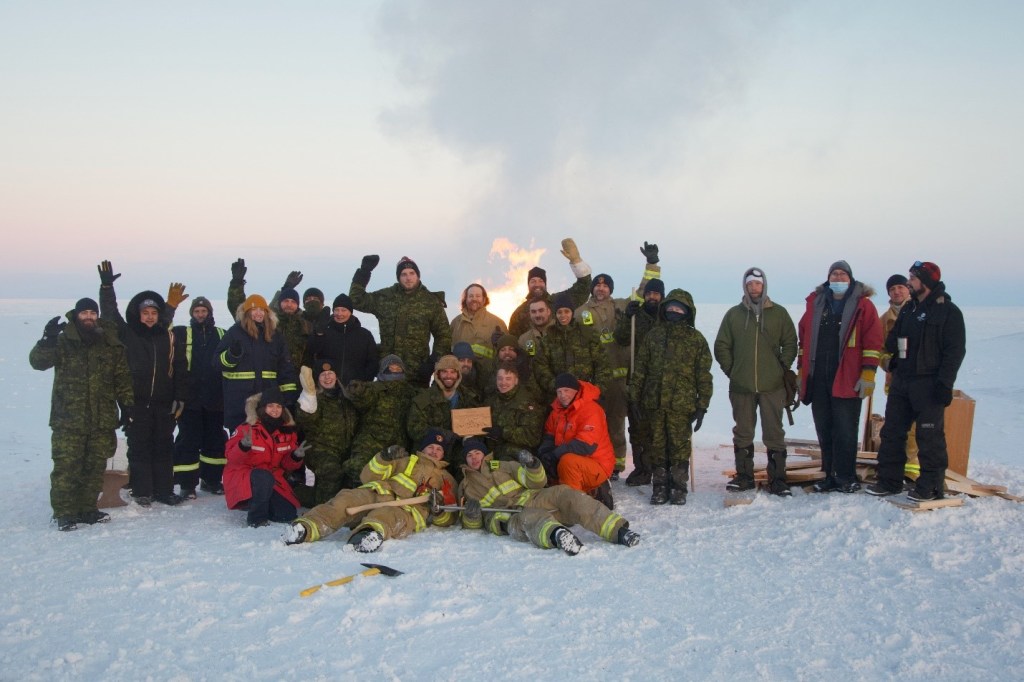
The sun rose above the horizon February 28th however due to the mountains; no one was able to see it besides the sunrays reaching past the peaks. March 2nd, we had the annual Alert Sunrise Ceremony Bonfire, though the sun just barely grazed above the dip between Mount Crystal and Mount Pullen an hour before the bonfire started and retreated back below but no one seemed to mind as they lit the giant stack of pallets alight with a blowtorch.

***
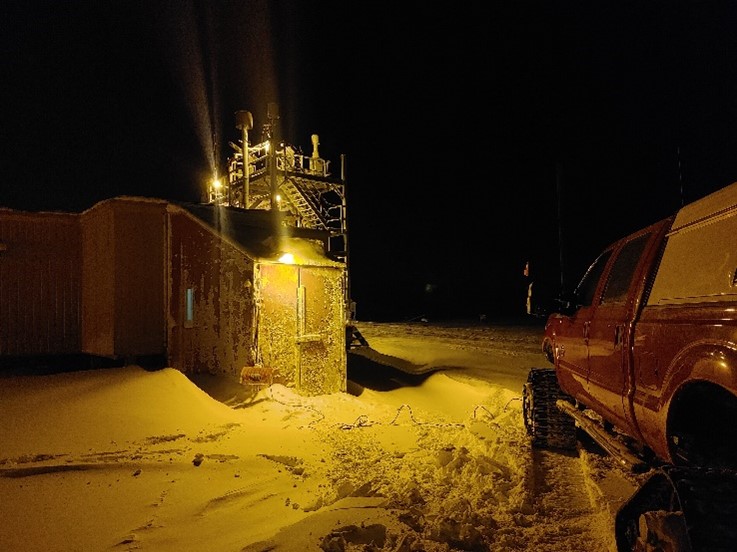
^The Lab during the first few weeks I arrived to Alert.
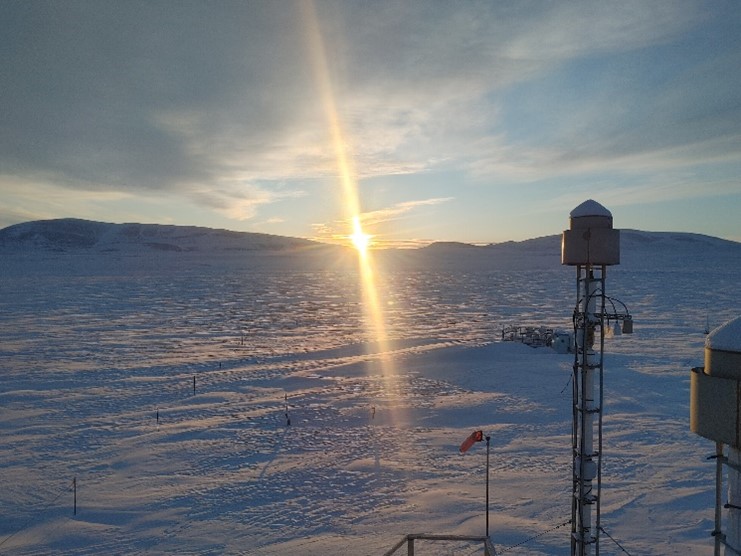
^Taken the other day with the sun now fully above the horizon.
It’s hard to believe when I got here it was completely dark, and the lab – a shining beacon in the vast void of the tundra, was the only thing I could use to get my bearings when working outside. Now, when I step outside, I can see for miles. Yesterday, I even saw my first Sun dog or Parhelion if you want to be scientific.
Sun dogs are a type of halo – where the sunlight that refracts through ice crystals in the atmosphere create arcs surrounding the sun usually when its near the horizon. In that video the leftmost sun dog is more visible than the rightmost, but in general, they were pretty weak. I think I might have just gotten the tail end of the refraction as when I came back outside to take a proper photo, they had disappeared as the sun had shifted ever so slightly. Sun dogs can look like spots on either side of the sun, like in that video, and as they increase intensity and stretch around the sides of sun like a sideways arc.
The reason why sun dogs can only be seen to the left and or right of the sun is because of the angle of orientation the ice crystals the light enters. As the ice crystals face horizontally, the light that refracts through them is also refracted horizontally. The proximity to the sun also dictates what colours will be visible as well! At the side nearest to the sun, sun dogs will appear red, and move down the colour spectrum the farther away from the sun into green, blue, etc, hence the weird vertically striped rainbow.
You may be thinking ok Val this is confusing, wouldn’t all sun halos be sun dogs?? No! There’s a huge variety of halos that can be caused by ice crystals, sun dogs just so happen to be the type of halo that flank the left-right sides of the sun in layman’s terms. Sometimes sun dogs will occur in conjunction with the very cool and very technical sounding ‘circumzenithal arc’ which is a halo that looks like an upside-down rainbow far above the sun. So, if you see a sun dog, make sure you also look way way up because you may see an upside-down rainbow as well!
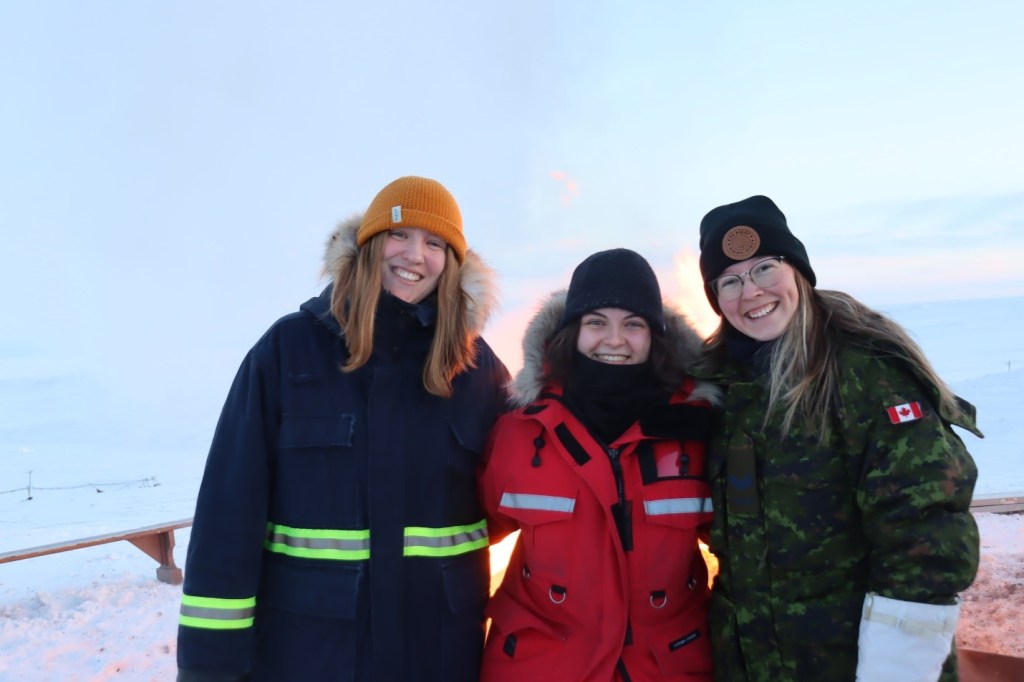
^Left – Alyssa, the ECCC weather station technician. Right – Melanie, she manages a lot of the flights to and from the station and mostly works in the station military office. Don’t quote me on that though because I honestly have no idea what most of the specific military jobs are lol.

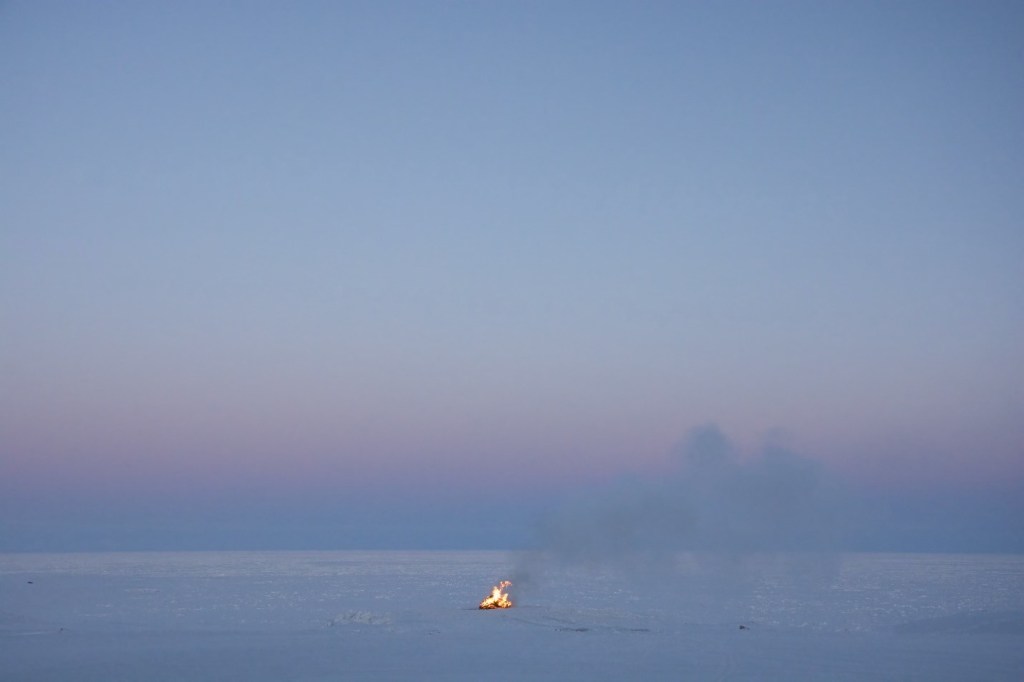
With no trees, plants, or even soil to catch fire, the Arctic is one of the few places in the world where you can leave a bonfire unattended.


 Alert-120
Leave a comment