The definition of an ice cave is a little bit more defined than just a cave with ice in it. Ice caves must contain a significant amount of year-round ice, and some portion of the cave must have a temperature that stays below 0 degrees all year round. There are a few in the vicinity of Alert, however, the most frequented and most reliable cave is the ice cave southwest of the station and GAW Lab that sits halfway up a rounded-out ravine.
There is a fork in the road on the main path to the Lab that to the west continues on Caribou Road, the longest road in Alert. There is some history on this road as many instruments from the GAW Lab used to be set up out here and Andrew – my boss currently filling in for Hannah as she is on her time off, informed me that the student used to have to trek across the tundra from the Lab to do filter changes. I definitely feel for those previous students over two decades ago and am glad that is not me doing that in the middle of the dark season.
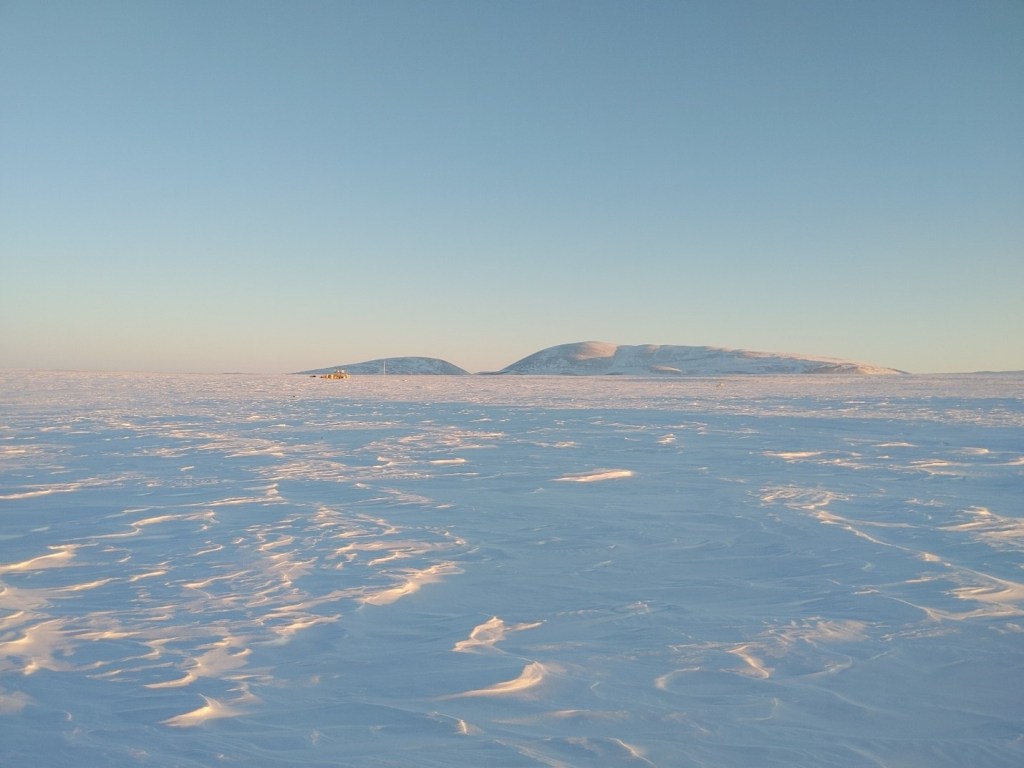
^The GAW Lab and mountains from half-way down Caribou Road.
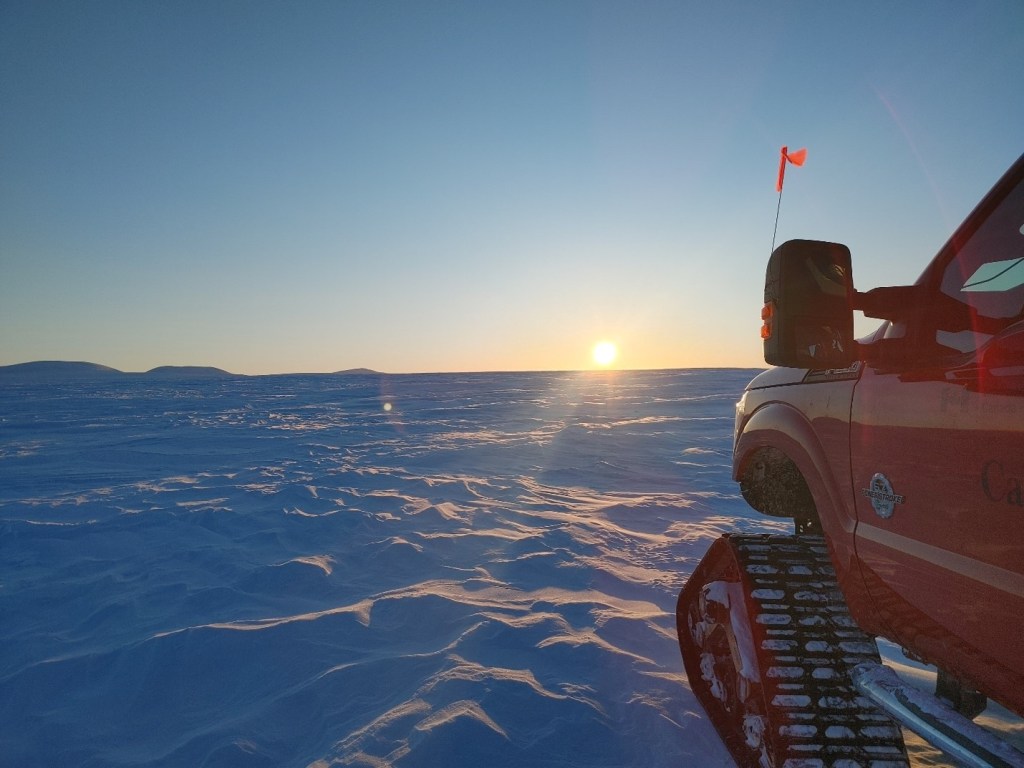
Me and Andrew headed out to the ice cave after out lab work on Friday (Mar 15th) to see if the ice cave had filled in to see if the planned rec trip out to it would be possible on the upcoming Sunday (Mar 17th). It was my first time going out into the tundra this far and off-roading for the most part as a good portion of Caribou Road is unmarked, swallowed up by the snow drifts. All I had for reference was the GPS Andrew was tinkering with, and the remnants of the previous tracks left by whoever had been out there a month prior. It was mostly the latter I relied on.
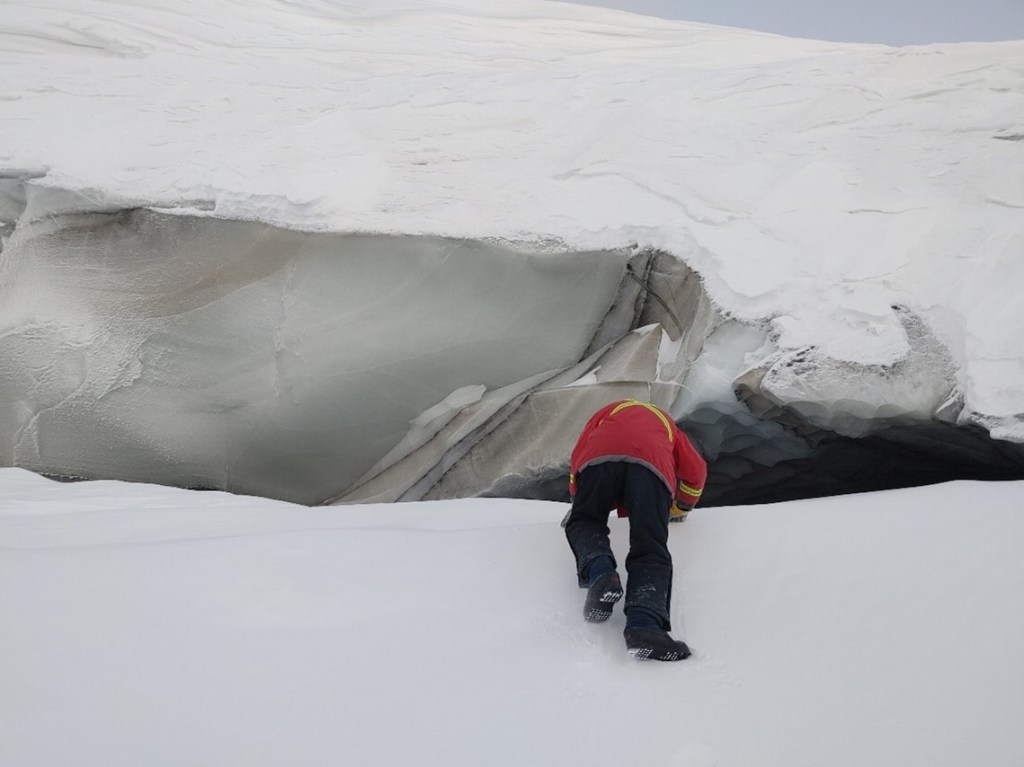
^Andrew kicking out his own footholds to scale the snow wall. I fell and slid down about 3 times before finally making it up to the entrance.

As we sat at the mouth of the cave, I couldn’t help but notice how absolutely deafening it was. It seemed the cave swallowed any noise and held it within. At the station you can hear the rumble of the plows clearing snow, and at the Lab, the hum of machinery. But out here? Nothing. Absolutely nothing. My ears felt hollowed out whenever we had gaps in our conversation from the lack of sound, and layers of snow and ice purveying the silence. I almost asked Andrew if we could sit in silence so I could take it in, but we were both cold and already past our shift end.
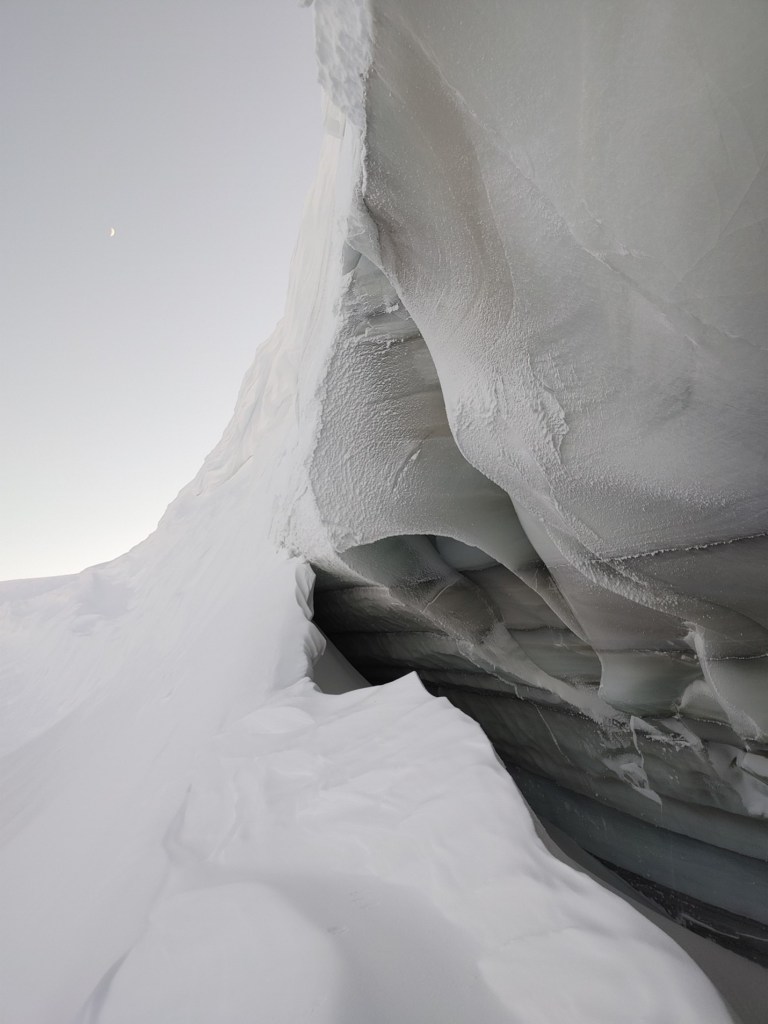
^The sliver moon and the edge of the cave mouth.
***
Today (Sunday Mar. 17), me and 22 other station personnel jumped into the ECCC trucks and military BV to go visit the ice caves, properly equipped with ice knives, rope, and shovels to create snow stairs to get up and out of the cave entrance.
The visibility was not as clear as when me and Andrew had staked it out on Friday, the United States Mountain Range remained shrouded in fog and Mount Pullen loomed ominously surrounded by wisps of wind and snow suspended in the air, though that didn’t really matter once you got into the bowels of the cave where headlamps were mandatory.
Me and a few of the firefighters led the charge into the cave. It was a scene straight out of a horror movie. The crunch of loose rock underfoot that sounded like cold crystals clinking together, echoes of wind and voices bouncing off the icy walls, and nothing but the light strapped to your head to keep your bearings. My headlamp had two settings; a dim setting that stayed constant and a brighter, high-power mode that stayed on for maybe 30 seconds before reverting back to the dim setting – which you can see in that video when it suddenly goes dark before I can click the setting back on.
The cave was not terribly long, as it had been cut short by an ice fall that blocked the exit to the other end. Some of the military guys were determined to snake their way over the ice wall and through the narrow opening where you could see daylight. I am not claustrophobic, but I thought that climbing giant cave-in made out of pure ice with no grit to keep you from slipping and bashing your face in seemed like a bad idea.
A group of us were taking photos at a collapsed arc made out of ice as the other group scaled the cave-in behind us. Every so often you’d hear a giant shattering of ice, silence, and followed by, “We’re ok!” as ice loosened and crashed to the rocky ground.
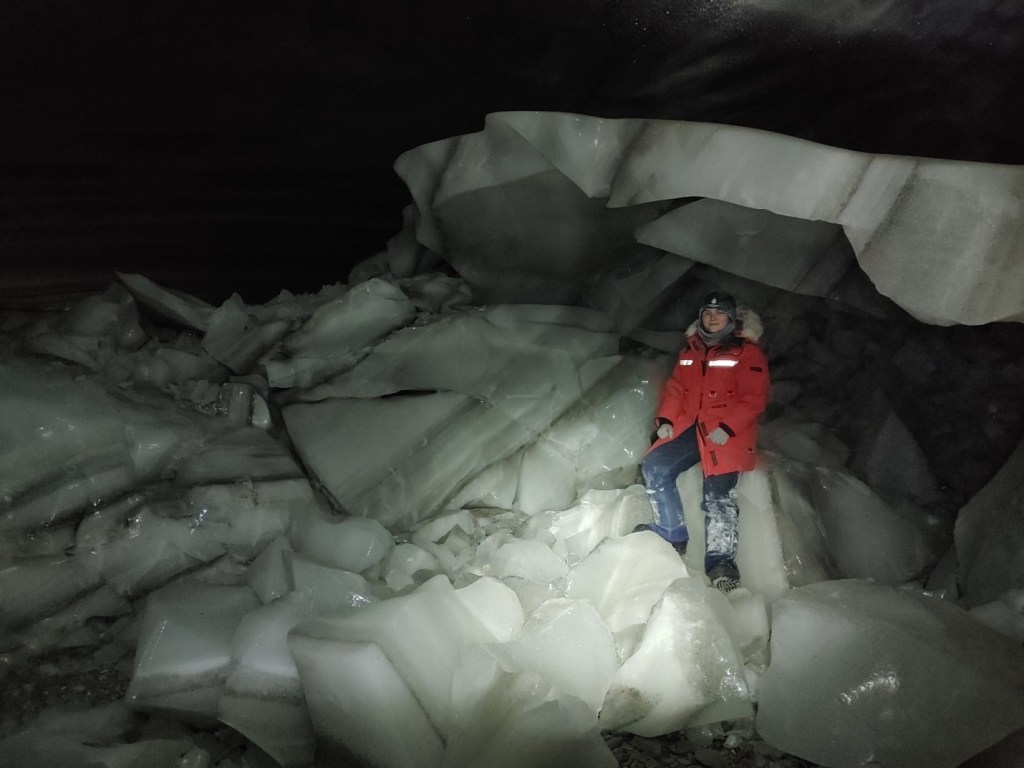
^A collapsed ice arc that blocked half the cave tunnel before the actual cave-in. It was THE photo spot, and thankfully, my high beam of a headlamp was the perfect photography light.
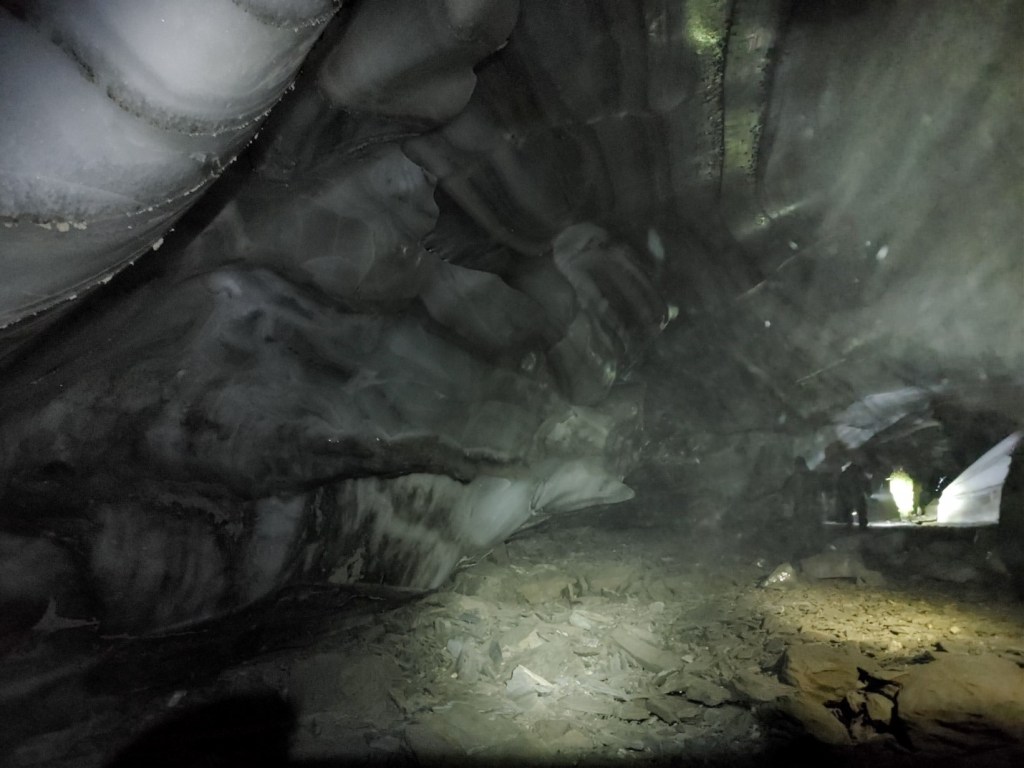
You may be noticing the horizontal stripes and colour gradients in the ice. There are a few types of ice caves: subglacial, surface ice caves, and compression arches (if you consider them caves). Subglacial caves sit at the bottom of glaciers/ice sheets so when you walk through them, there will be a rock floor. These caves are formed from water flows out from beneath the glacier/ice sheet or from the side, slowly caving out these structures over years of thaw, and freeze. The layers you see in the ice are from the same years of layering, and glaciologists can tell a lot about the age and weather these glaciers/ice sheets experienced from how thick each stripe is and what it is separated by. The accessibility of subglacial ice caves is incredibly nitpicky as it depends on a whole bunch of factors such as the time of year, snow fall, wind, and general geographic location. Depending on how windy and how much snow has been picked up, this cave could be buried beneath a snow drift as the ravine it sits in fills up.
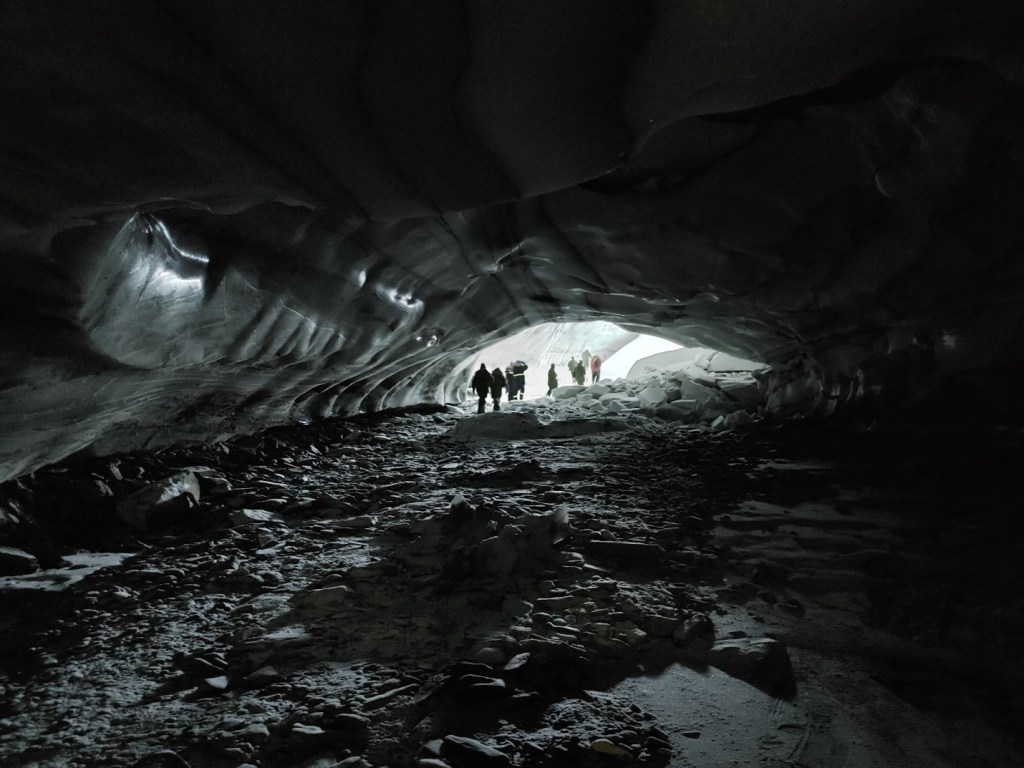
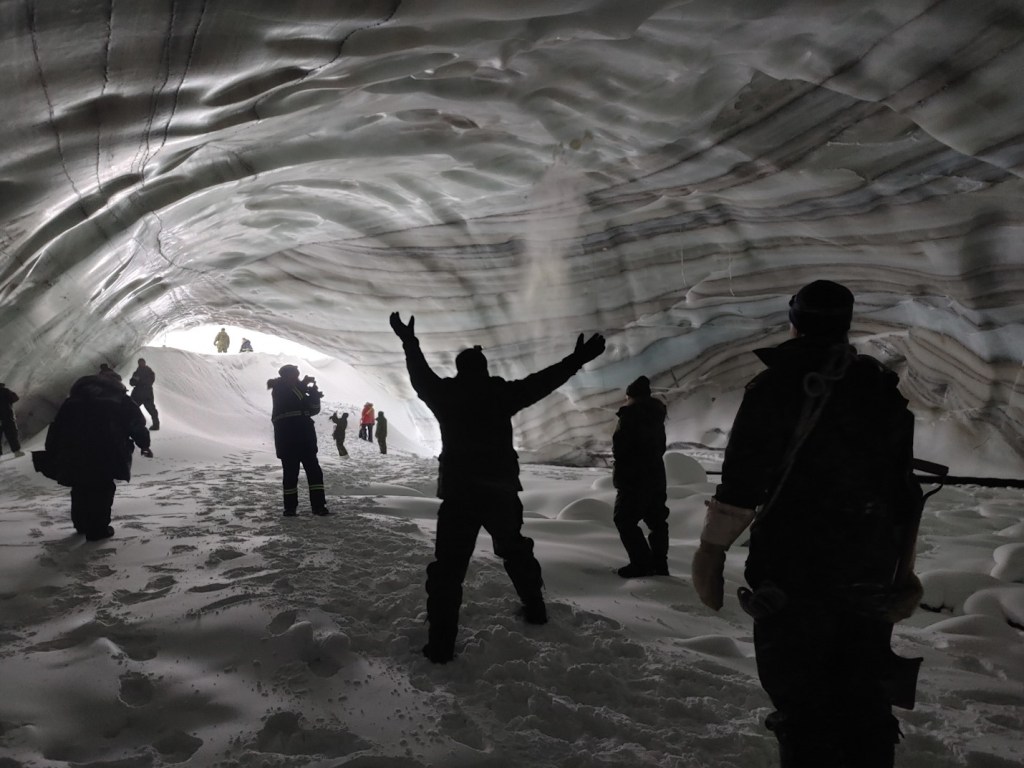
^You can see the snow wall at the mouth of the cave. From the top ridge, you’d slide in on your butt and get absolutely snow dusted – arguably the best part of the whole experience.
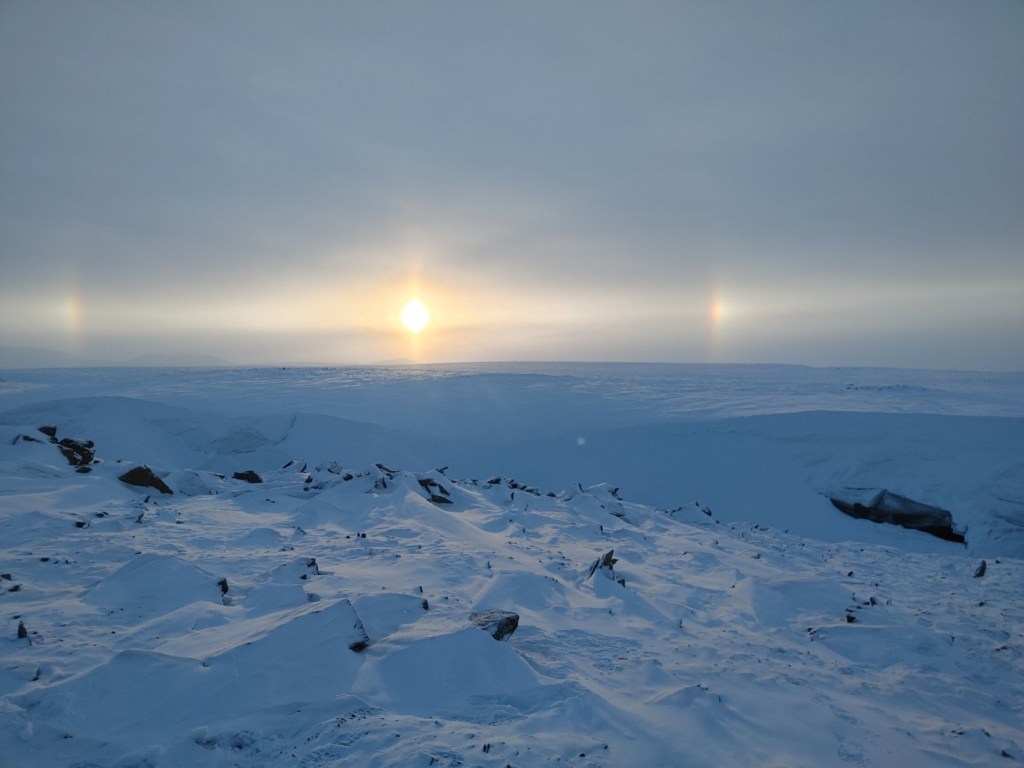
We were greeted with a beautiful sight as we made the trek out. Sundogs have become one of my favourite arctic phenomena and I find myself checking either side of the sun whenever I am outside to catch a glimpse.
The ice cave was a magical experience, and I can’t wait to visit again, maybe next time with a much stronger light and a better camera than just my phone. It makes me incredibly excited to take some glaciology courses at school and continue learning more about the arctic in general 🙂


 Alert-120
Leave a comment