Today we headed out to the end of the airfield to go explore the glaciers out on the sea ice. In the winter, the Lincoln Sea is frozen in time with glaciers standing watch over the icy tundra. The Lincoln Sea stretches from Cape Columbia (further northwest of Alert) to the northern tip of Greenland at Cape Morris Jesup. The ice here is the thickest of the Arctic Ocean and can get to 15m deep, with sea ice covering the water year-round.
I don’t know the exact science of it in a brief google search, but the Lincoln Sea and its pocket of multi-year ice is an incredibly important component in the migration of sea ice around the Arctic Ocean east as it effects the current that shifts the drainage of sea-ice towards the Fram Strait (the passage between Greenland and Svalbard where the majority of arctic sea ice drains through).
The day was so clear today, you could see the outline of the Greenlandic coast from across the Nares Strait (the most northern segment, and the segment we are located is named the Robeson Channel).
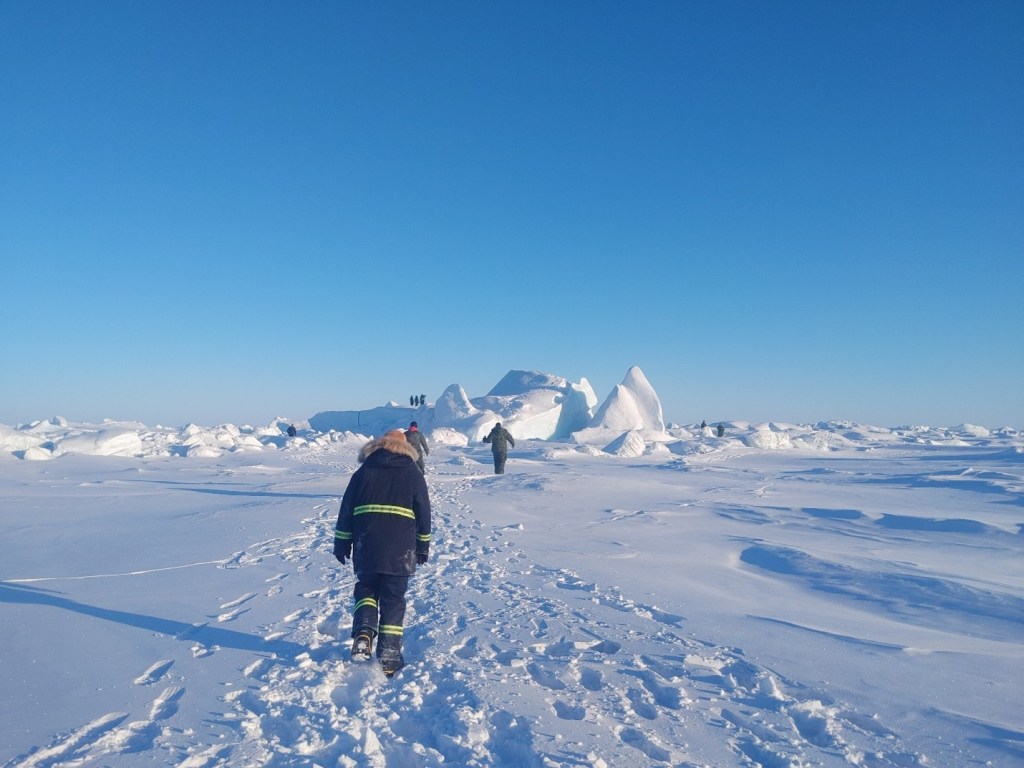
Walking out over the ice, the sun reflected off the snow creating an almost blinding landscape. Slivers of brilliant blue shredded through the snow as glaciers jutted out at odd angles and shapes. The odd crack would cleave through the landscape running for what seemed like no end, and if you were brave enough, you could look down and see what was hidden from the surface. A blue frozen flesh that runs deep into the depths.

What Causes The Colour Blue in Glacial Ice?
It all has to do with light, and now that the sun is visible almost 24 hours a day, we have a lot of it. When snow has freshly fallen, or ice is newly formed (if it has not been contaminated with other debris), it has a whole bunch of air trapped inside. As layers of ice sheets and glaciers form on top of each other, the added weight continues to compress all the layers underneath – pushing out all that air and creating huge crystalline structures that are amazing reflective bodies for light to be trapped and reflect out as short-wave blue light. In fact, the longer it takes for the light to travel through the ice, the bluer it will appear which is why the deeper ice inside those crevices appear bluer than the sky itself.
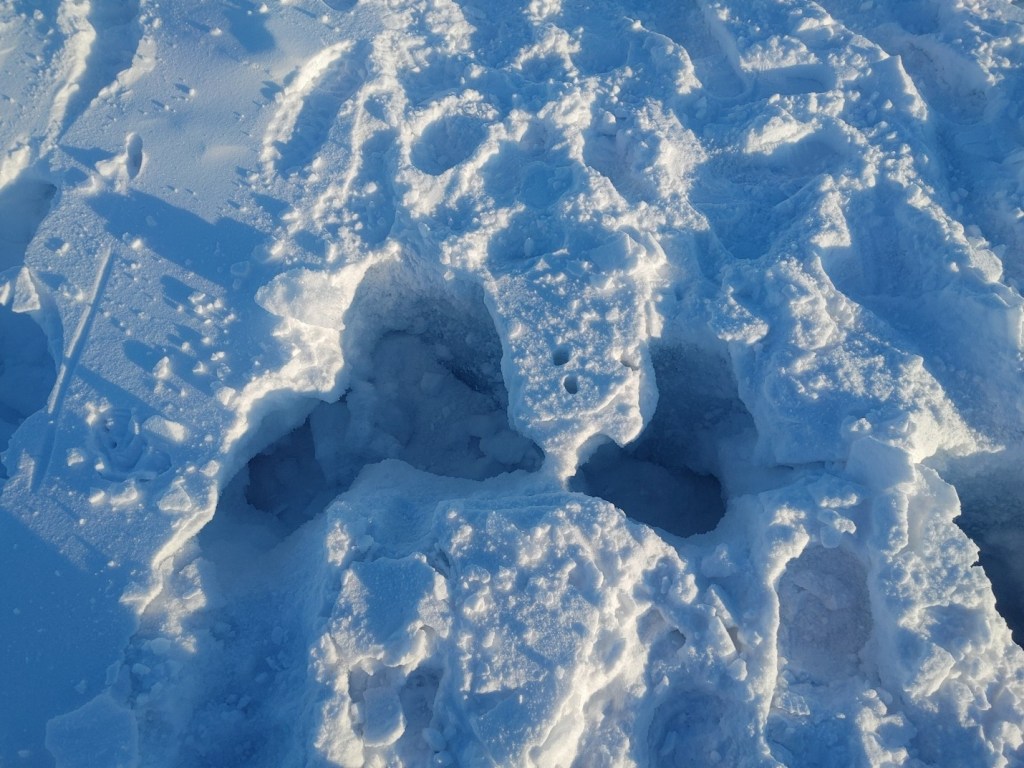
You might assume that it was all frozen ice beneath us in a flat sheet, but nature is not so kind. I’d be careful to step over all the cracks, no matter how small but the snow covers everything – hiding potholes such as these.
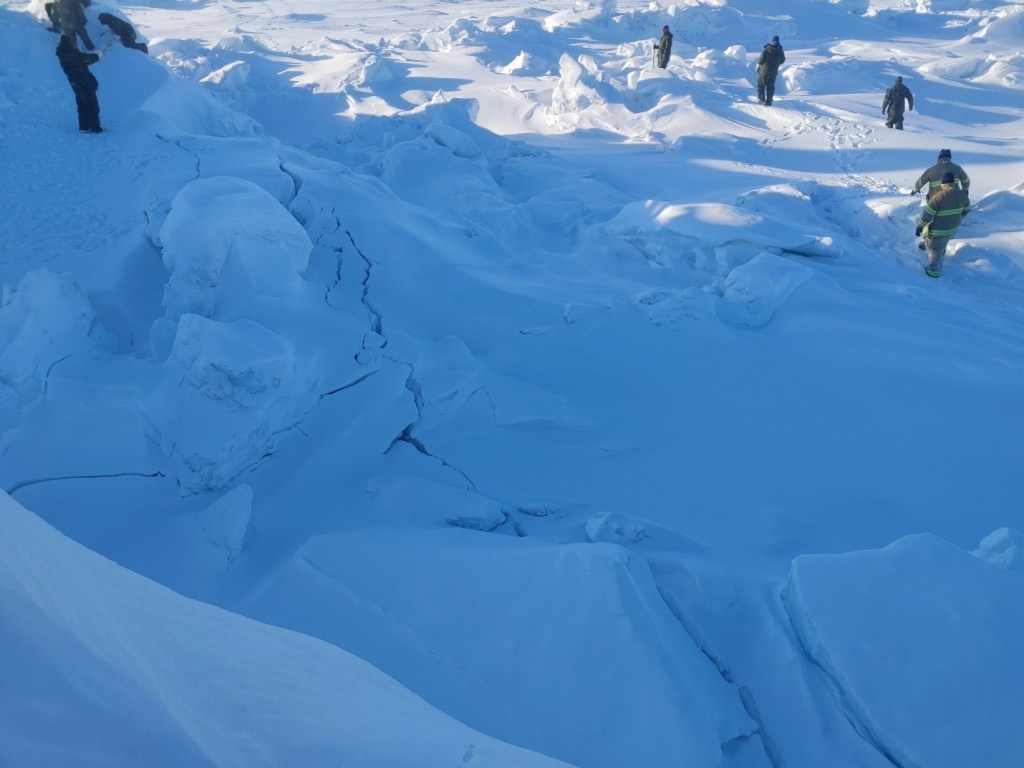

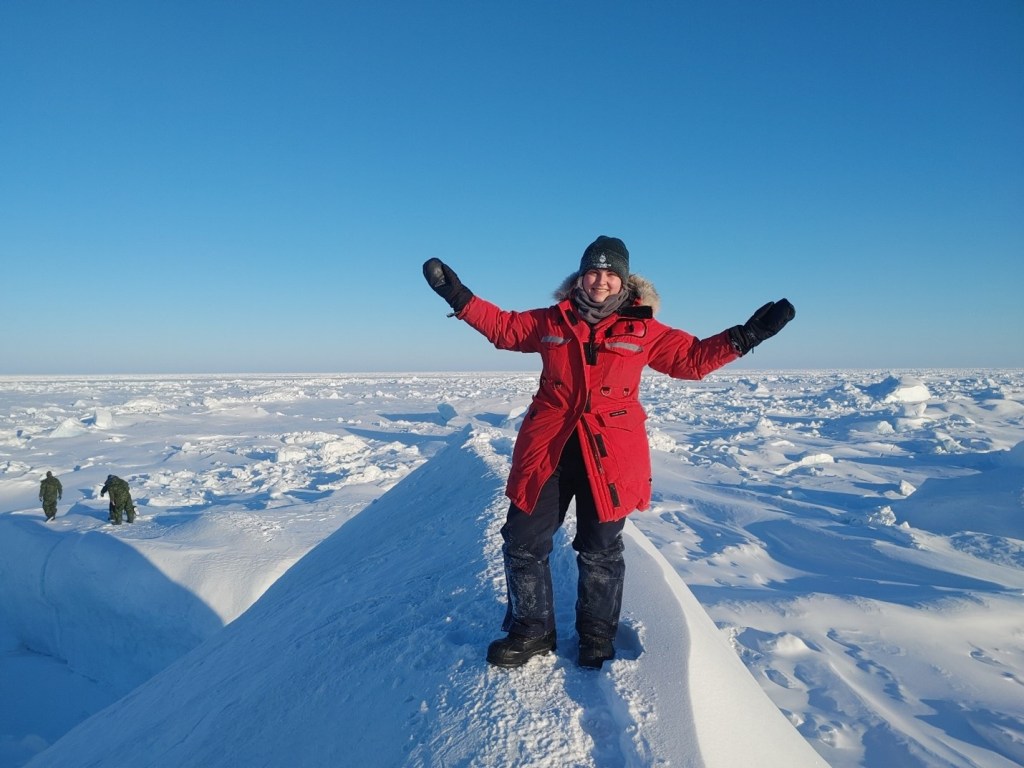
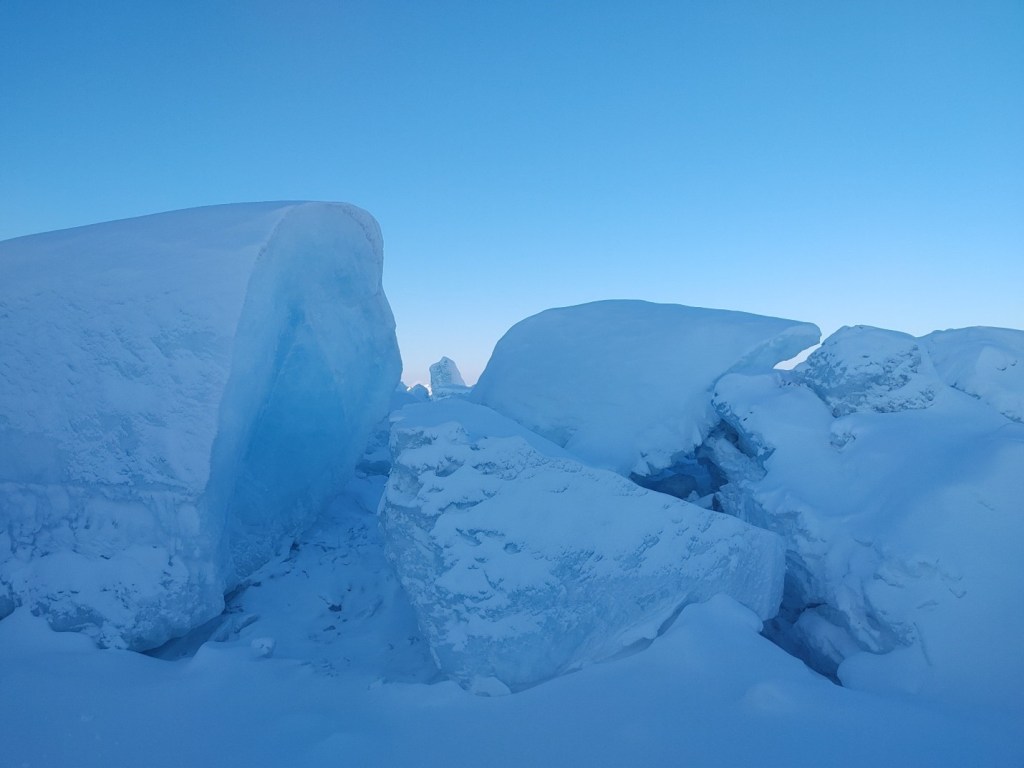
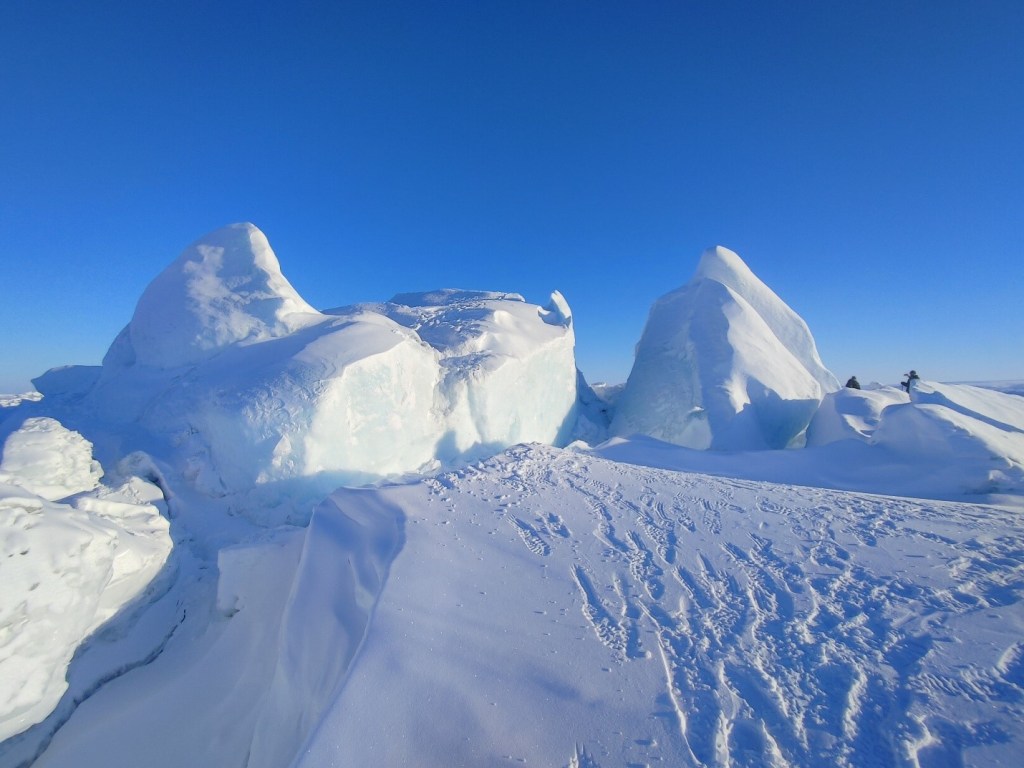
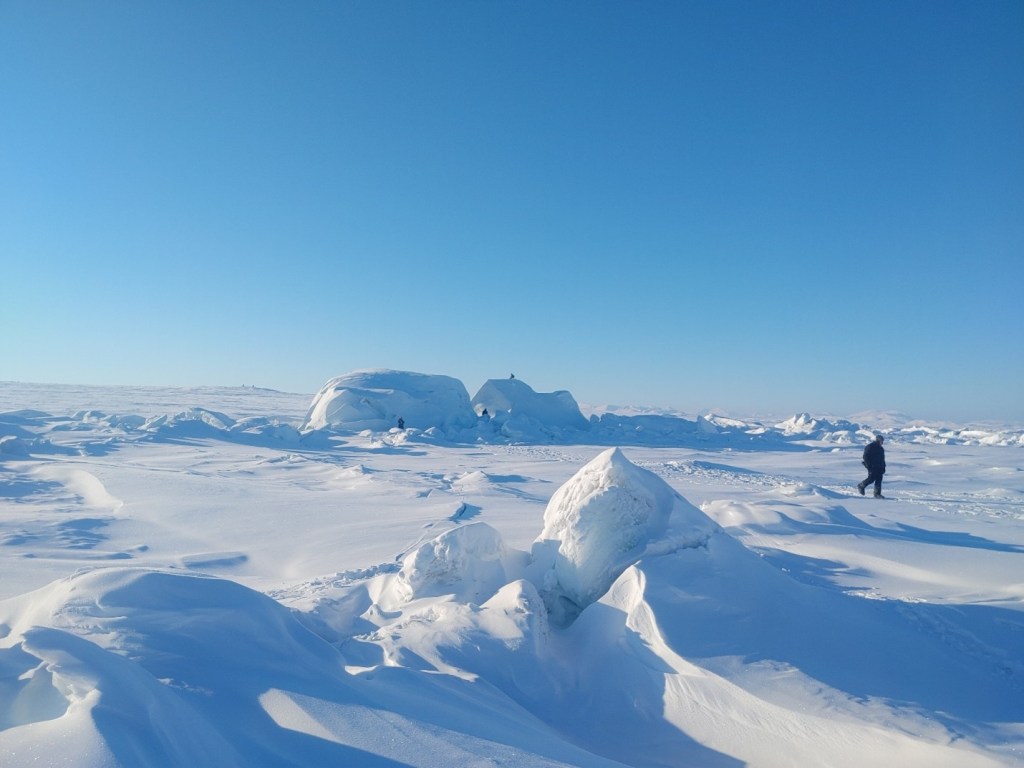
It’s a little weird to think that come August, all of the ice we were standing on will have joined the ice floe that will be pocketed with these free-floating glaciers we were climbing only a few months prior. The water will come right up to the edge of the airfield, and this will be the season where polar bears will become a more regular occurrence as the sea ice breaks up.
A short entry today as my blog has been discovered by a few of the military people up here and it promptly spread like wildfire.
This entry is personally dedicated for the firefighters who like pictures over words 😊 jk love you guys

 Alert-120
Leave a comment