Long time no entry! A few days ago, I passed the 100-day check point and I’ve gotta say – I am ready to go home. If I wanted to or had to, I could stay longer, but springtime is one of my favourite times in Ontario and the time of year I look forward to most. I missed my annual hyacinth houseplant so much I had to sketch one in my journal and keep it propped open for a sense of normalcy.
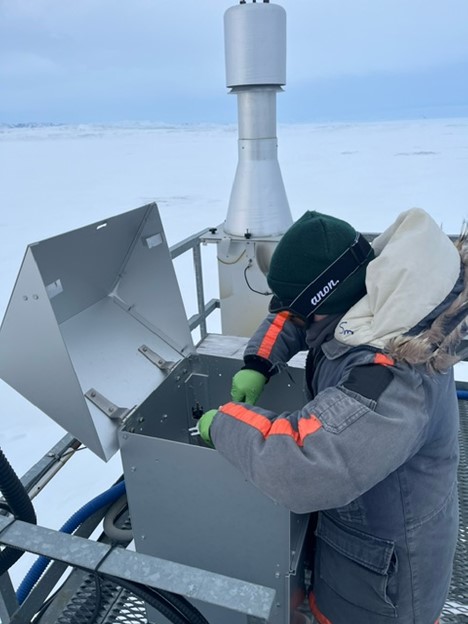
Lots of stuff has happened over the last two weeks, despite me complaining of boredom. A couple Environment Canada staff joined us for a week to do some ice-coring and a professional audit on how I perform the Persistent Organic Pollutants filter changes for the Northern Contaminants Program. This audit happens once every two years, and I was the lucky student to overlap with their scheduling. Of course, winds were 75km/hr that day and I took a metal filter plate to the face but apparently, I did really well.
ICE-CORING
There are a few different scientific purposes for ice-coring aka the act of taking a giant cylindrical ice sample out of the sea/lake ice. Analyzing layers of green house gases trapped inside the ice for a timeline of which gases were in higher quantities throughout time, identifying what if any pollutants have found their way in ice, etc. The ice we were collecting two weeks ago was for an organic pollutants lab that was studying the concentration of organic pollutants in multi-year ice (ice that stays frozen for multiple years). The Lincoln Sea is the perfect site for this as the majority of it stays frozen year-round and has been the site for this type of sampling for over a decade.
Saturday morning, after a quick brunch, me, Hannah, our boss Andrew, the ECCC Weather Station crew, and the two ECCC staff set out for Black Cliffs Bay – a bay of frozen sea ice northwest of the station. We were on high alert due to bear tracks being sited the day prior and once assigned our roles, whoever did not need to be aiding with the coring, was to be on bear watch.
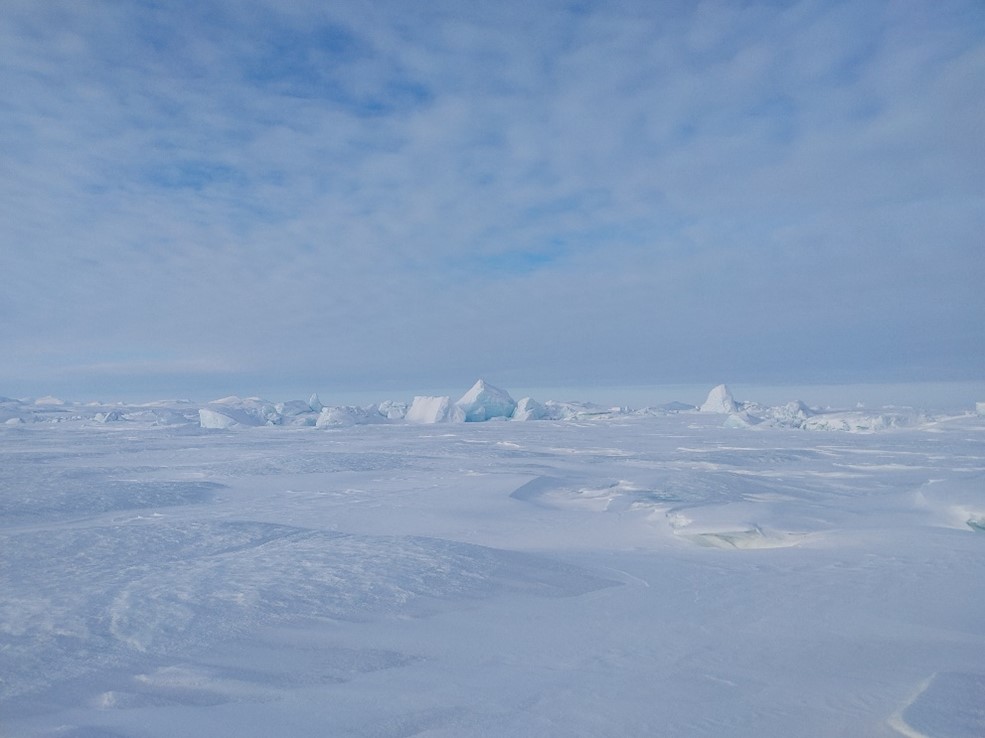
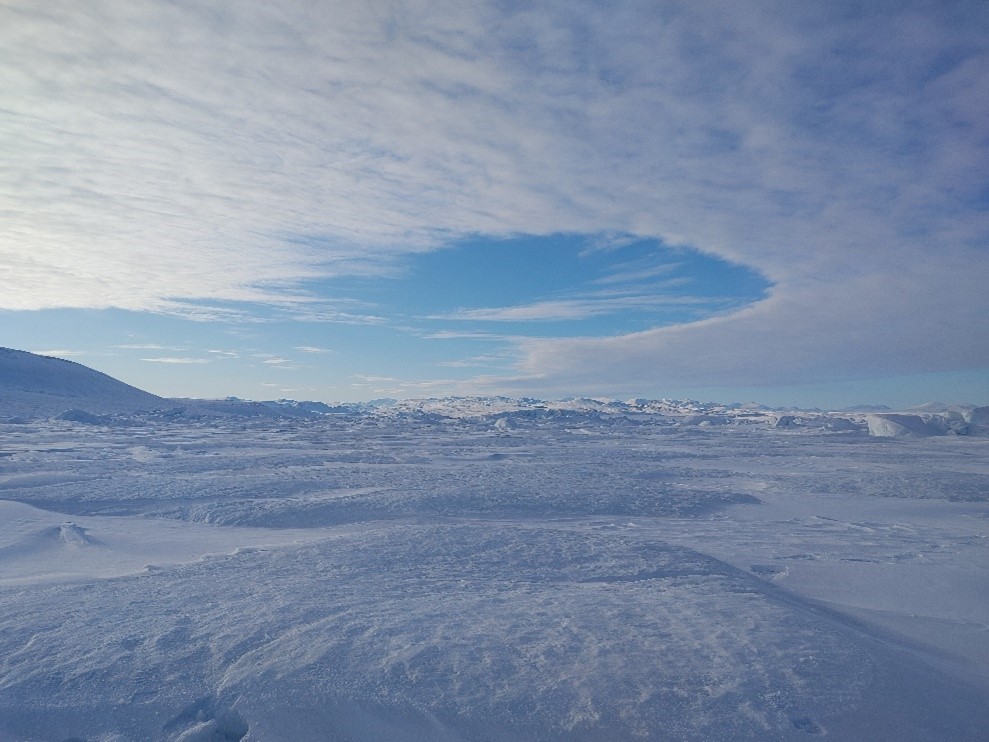
^Our surroundings as we worked out on the sea ice. Polar bears love to hide behind glaciers so you can see why this despite the beautiful weather was still an incredibly tense situation. Hannah uttered the B word (bear) once and all of us froze in fear asking her to repeat herself. There was no bear.
STEP 1: DRILL HOLE
Ice-coring starts off pretty simple. Find a patch of even-enough ice and begin drilling to check the depth. Multi-year ice will be denser than first-year ice, and while it’s not an exact science, usually a depth of over 200cm is acceptable. James, ECCC weather station staff, is 6’7 for scale. That site specifically we never hit the bottom, but it was for sure multi-year ice with that depth.
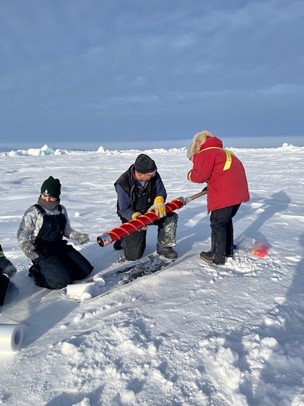
STEP 2: DRILL THE ICE AUGER TO COLLECT SAMPLES
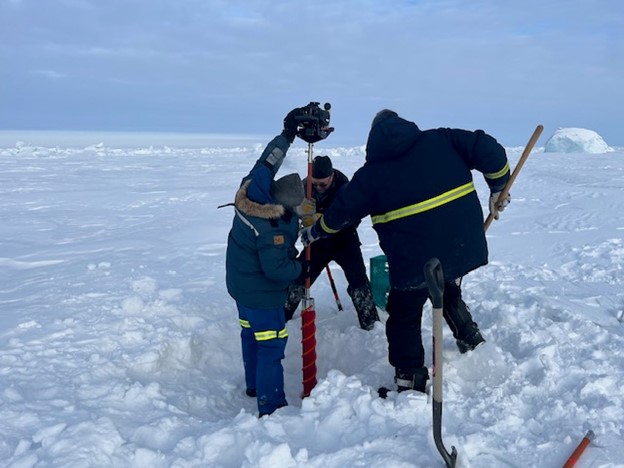
The ice core with catch on latches on the bottom of the auger (red tube with orange ridges) and will be excavated piece by piece until ideally, you have a full sample from the surface of the ice all the way to the bottom (which I am told is the most important part of the sample).
STEP 3: DEPOSIT ICE CORE AND WRAP SAMPLE IN BAKED TIN FOIL
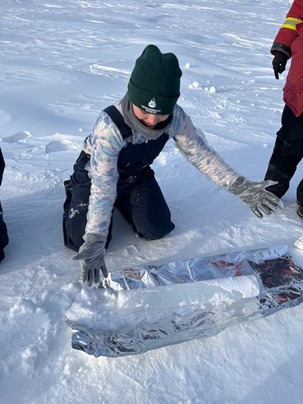

If the whole science thing ever falls through, I think I’d make a really good sandwich artist at Subway. We wore the same full arm gloves that cattle farmers wear in order to minimize contamination as we wrapped the ice cores. It was near impossible to pull the gloves over your parka, so I opted to be a little chilly for the sake of movement.
STEP 4: BAG AND TAG SAMPLE
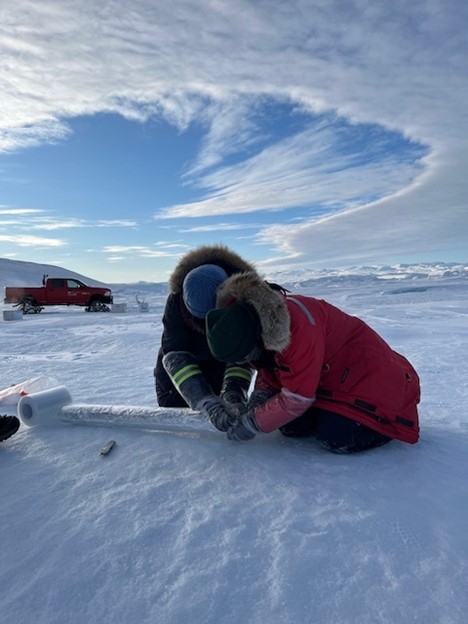

I don’t have any photos of Hannah doing any tagging, but it was incredibly important to keep track of
- Which core came from which sample. Due to the ice depth, cores were taken in parts so how many parts of the core came from which site needed to be labelled (including which site or hole aka hole 1, 2, 3, etc)
- Which end was the top or the bottom. When whoever unwraps these cores in Toronto, they will need to know the vertical order of the samples to recreate one full core from the top of the sea ice to the bottom. We marked the top and bottom with coloured zip ties – pink for the top, and purple for the bottom.
- If a sample shattered, which original core it was apart of. Some of the ice cores would come out shattered or needed to be broken into two pieces in order to be wrapped and fit in the transport cooler.
I didn’t really want to tag because it seemed like a lot to be aware of, so I opted for the wrapping station. Me, Hannah (right), and Alyssa (left) made a great team, and it made the 6 hours of coring go by much quicker. On the way back to the station, we snacked on cinnamon buns that we had snagged from the dining hall and warmed in foil by the truck heaters and drank thermos hot chocolate. We would’ve stayed out longer to meet the 10-sample quota, but by hole 9 and a broken drill, everyone was exhausted from being outside for so long.
A broken drill also meant we didn’t have to ice core on Sunday! Meaning, I didn’t have to work the entire Easter long weekend. They’ll be back in May to hopefully get some lake ice samples, but I will be long gone back in the world of green and trees.
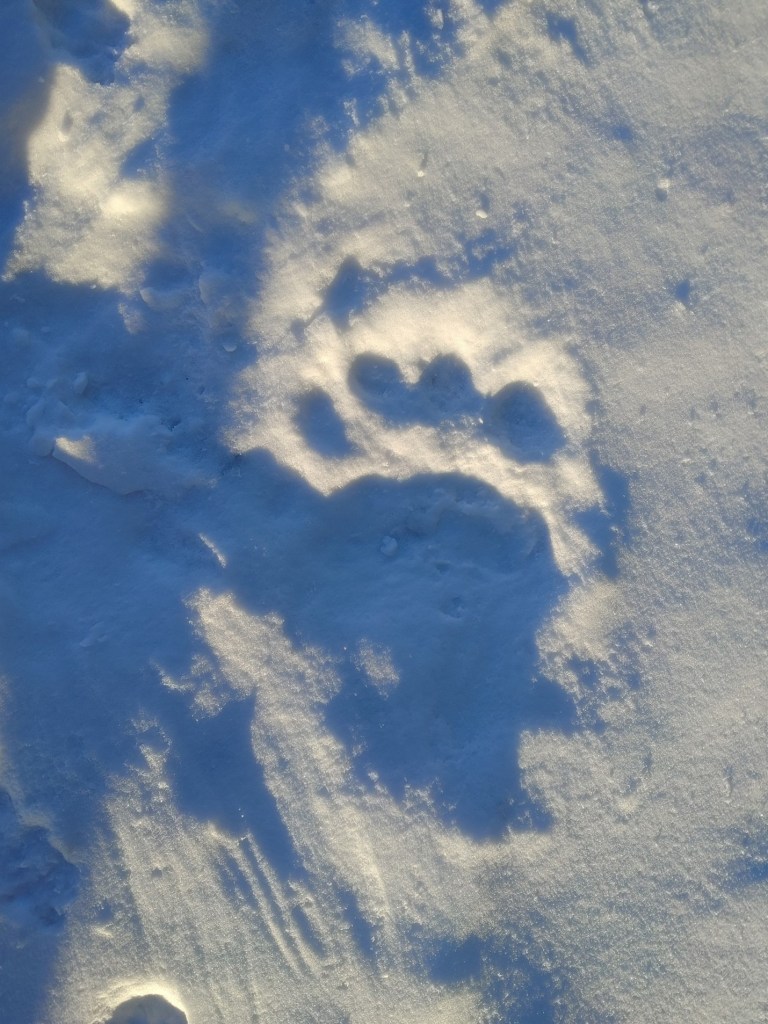
Here are some photos of me doing some incredibly important science stuff and polar bear tracks found right outside our office on station:

 Alert-120
Leave a comment