Fieldwork in Suffield has consisted of main two facets:
- Nest Surveys: Searching for nests by watching males and females interact, watching the female returning to her nest, accidentally flushing her off the nest if you are nearby and randomly stumbling upon them. Typically, two of us will pair off to go survey in one part of the site, and the other singular person will have a list of all the nests in the site that are still active and check on them one by one. It’s important we have a good chunk of active nests that we watch for chicks to band when they are old enough (~7 days).
- Mist-Netting and Noose Lines: Setting up large volleyball-looking nets on poles near bird hotspots to try to get them to fly into it by playing the calls of males in other male territories, and lining nests with a loop of noose lines made out of fishing wire to catch females/fledglings leaving the nest. Birds caught will be banded if they haven’t already, and some will have radio trackers attached to them by a hardness and a few of their tail feathers collected as DNA samples.
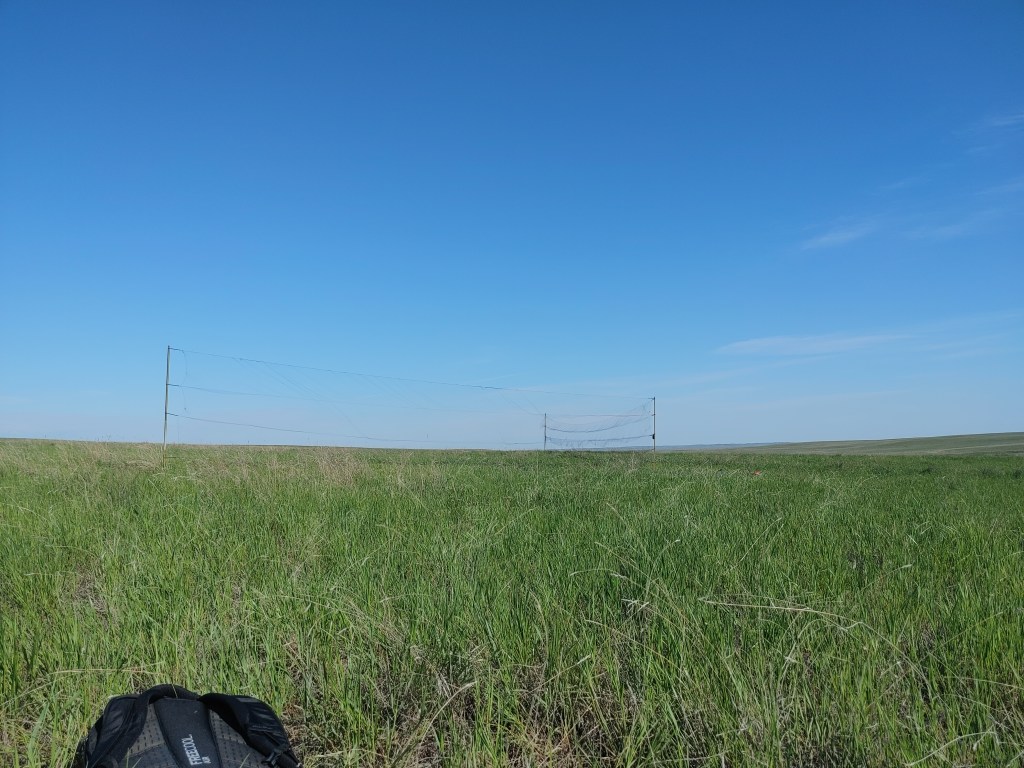
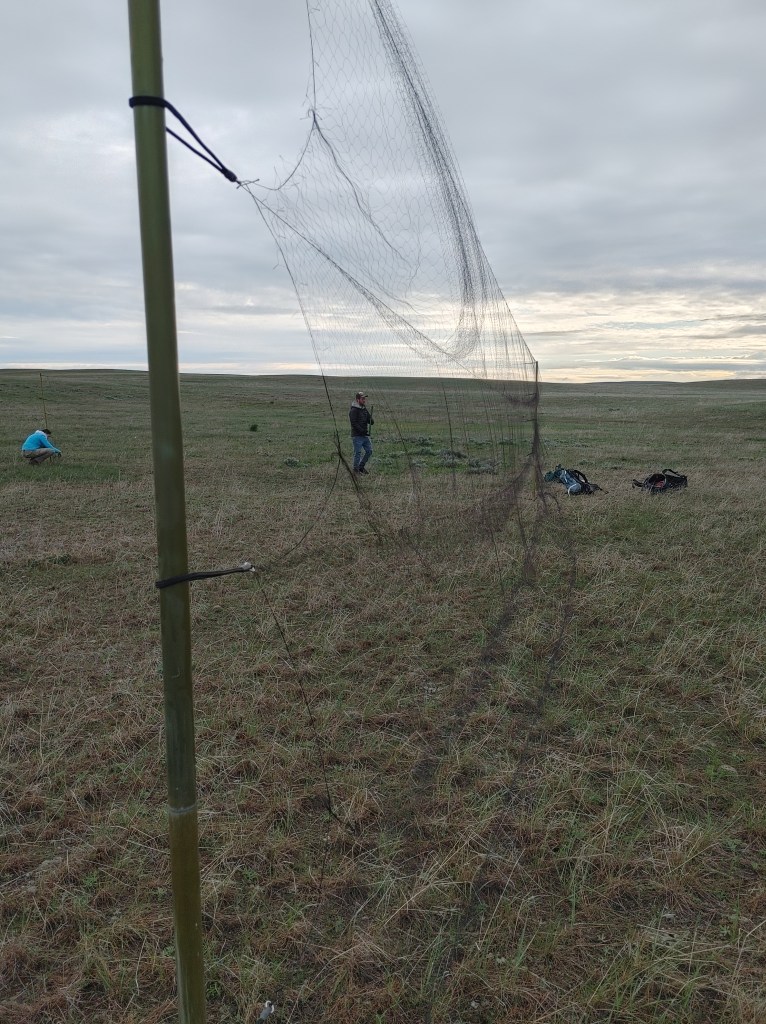
Mist nets are made out of an incredibly fine net material and are complete and utter pains to set up. The net mesh will get caught on literally everything and tangle like no ones business. We set up and take these downs at least 6-8 times a day, so I have gotten into a rhythm but all it takes is one rosebush or cactus for it to get caught on and riiip.
The best days to mist net are days with cloud and no wind as it makes the nets damn near invisible, making it much easier to catch birds flying directly into it. When birds fly in, they’ll drop into the loose pockets and get tangled enough that they are stuck until one of us can take them out to get banded/tagged and eventually released. Sometimes birds can bounce off or get themselves out pretty fast so you have to sprint over as soon as one of them gets in.
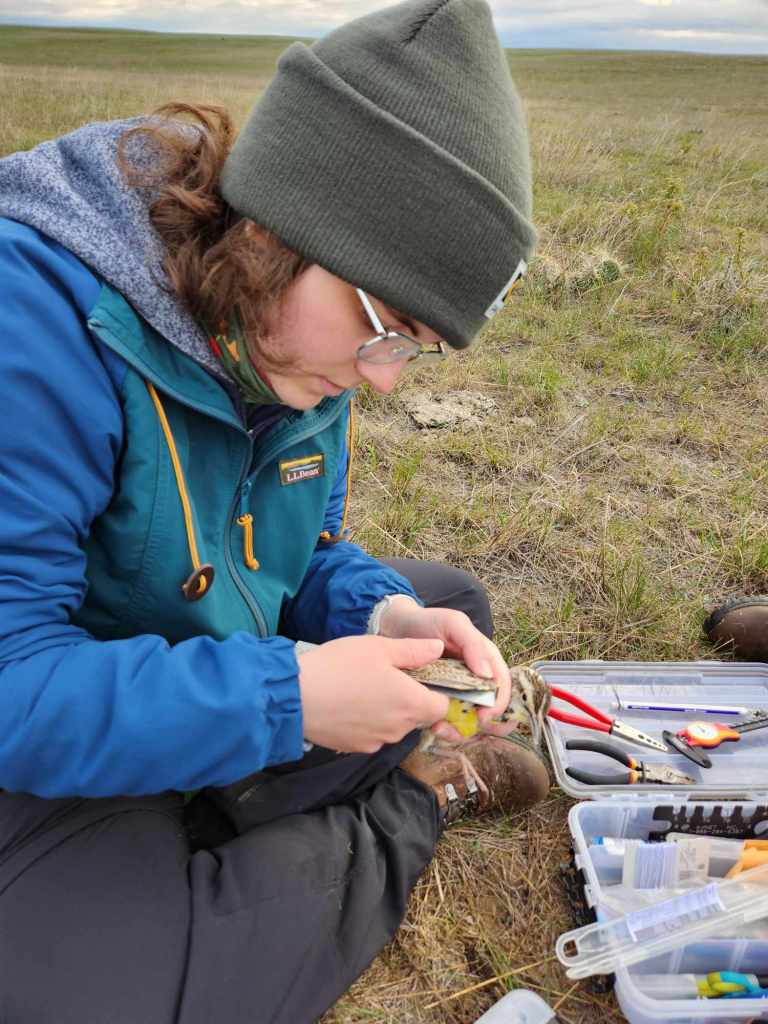
^Banding a female Meadowlark.
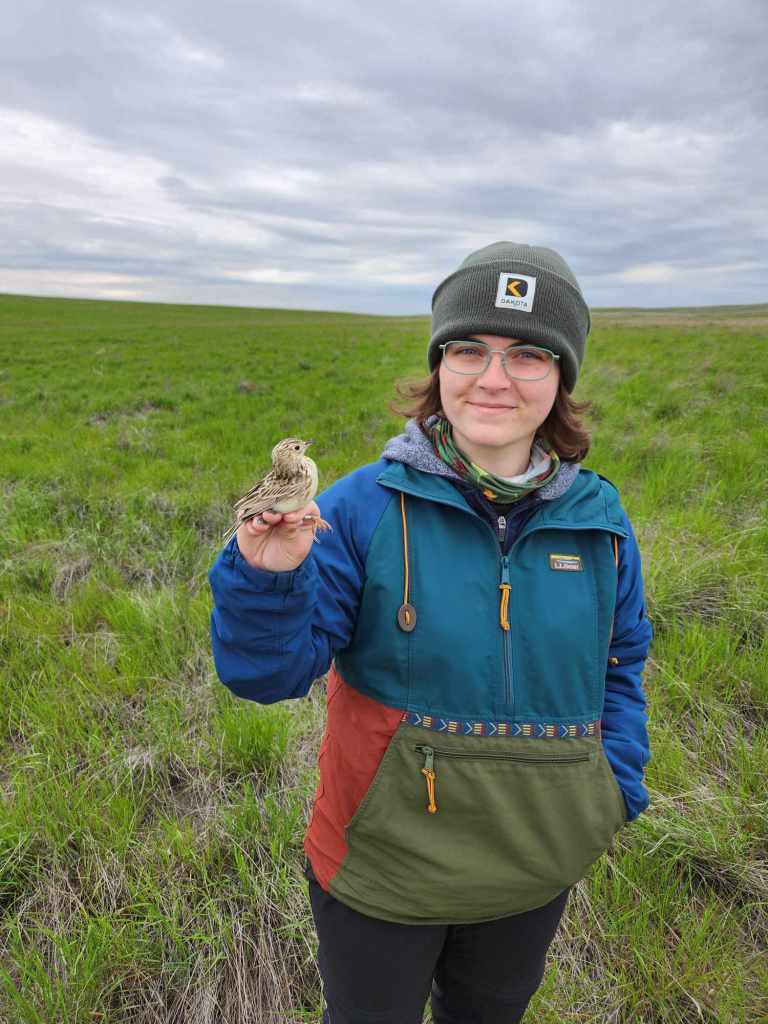
^Sprague’s Pipit
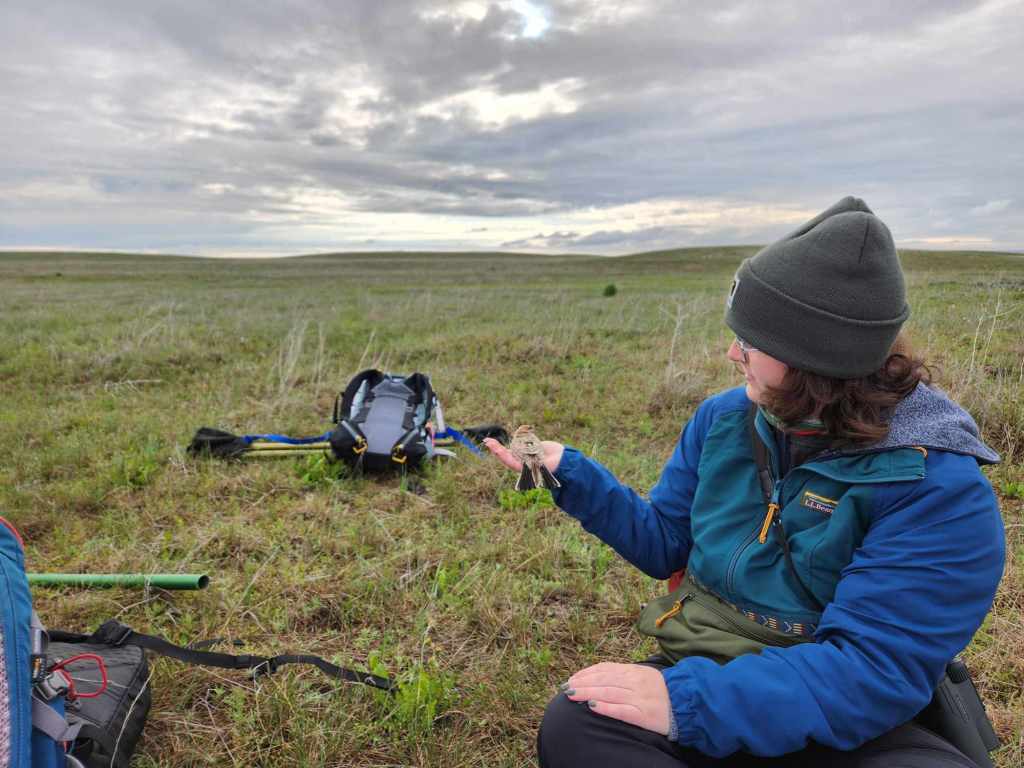
^Releasing a Horned Lark
Bird banding is the activity of attaching metal/plastic bands that may have a numeric code, or be placed in a specific colour sequence to ID the individual to the legs of various bird species for all sorts of reasons. All of the birds and chicks we have banded so far have been given an aluminum band that has been stamped with a specific serial numbered that is registered in some governmental data base. Not just anyone can band, you need a specific permit and bands are issued by certain scientific bodies.
Colour banding is a little less restricted and colour banding is usually performed as a way of IDing local birds in studies such as the grassland research performed by my superiors. The bands are attached in a specific sequence, and generally read in order from the top band on the left leg first, followed by the bottom band on the left leg, top on the right leg, bottom on the right leg.
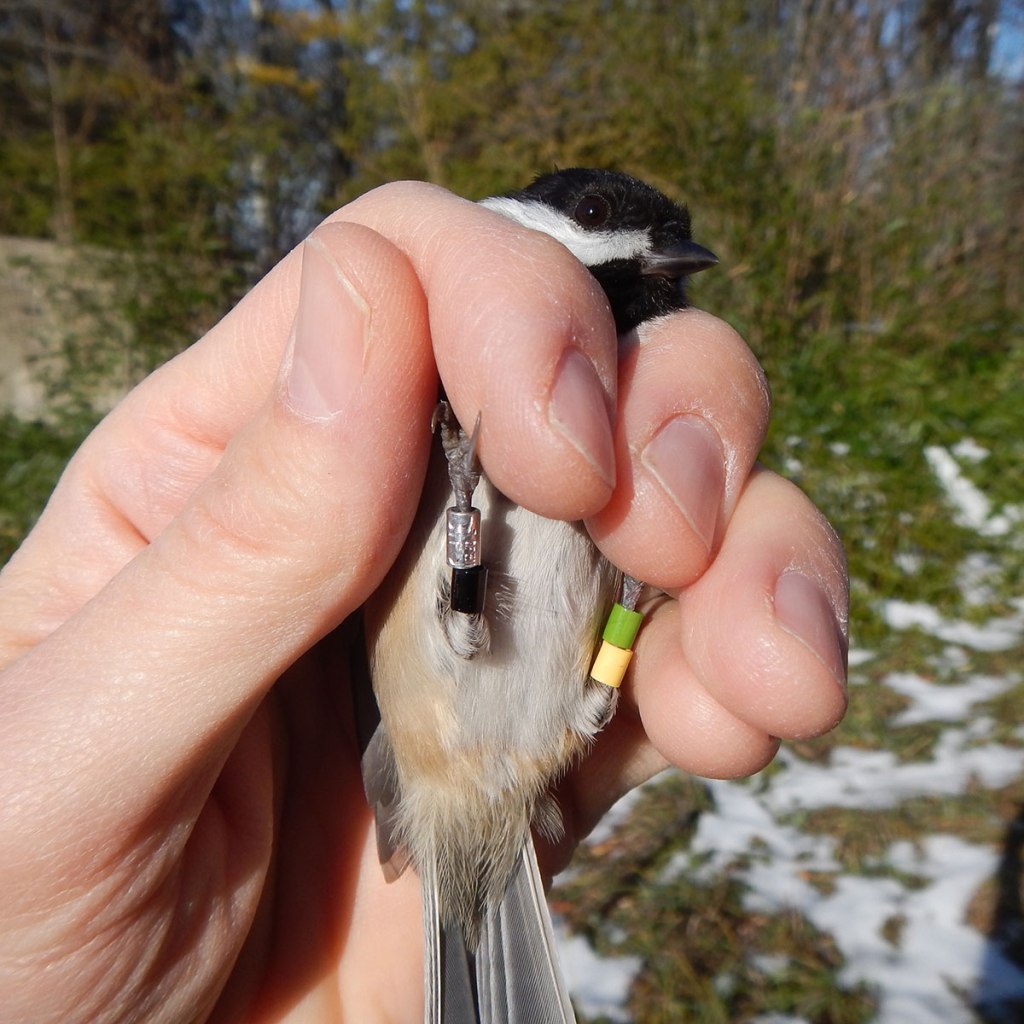
This is a chickadee that was banded at the University of Guelph (not related to this project). If I saw this bird in Suffield, I’d read its ID as YGBA (Yellow, Green, Black, Aluminum).
We are also responsible for attaching radio tags to the backs of some of the species found in the Suffield NWA; Horned Larks, Chestnut-collared Longspurs, Thick-billed Longspurs, Grasshopper Sparrows, Bairds Sparrow, and the Sprague’s Pipit.
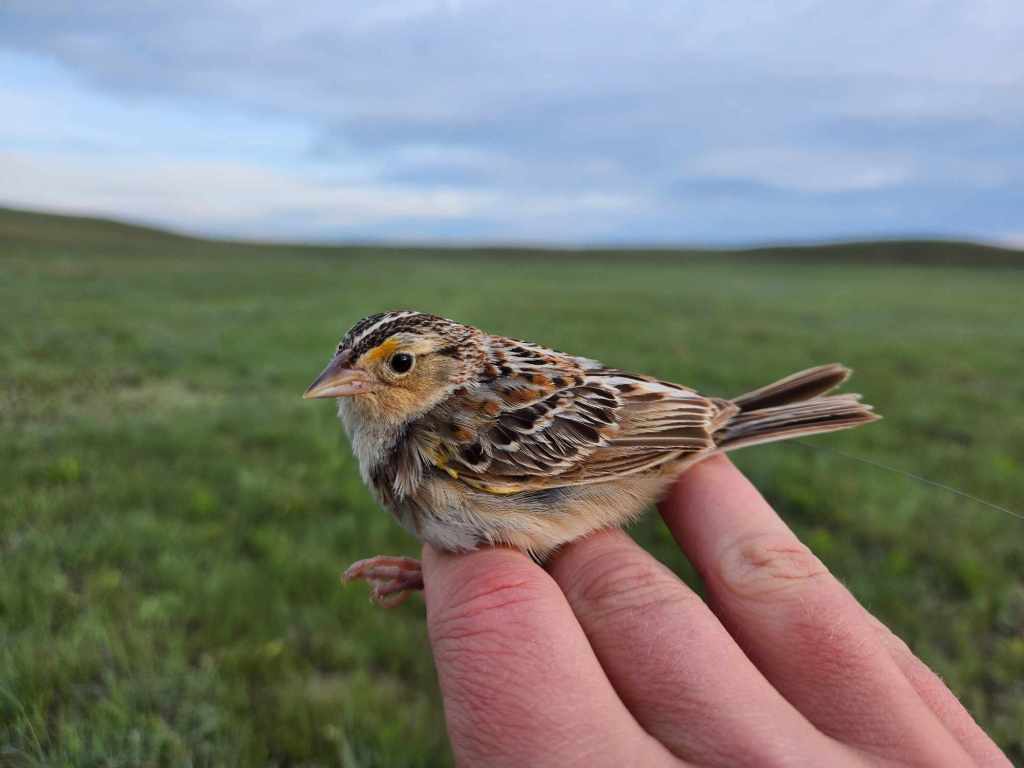
We are able to glue on a handmade harness out of stretchy string/stretchy plastic bracelet line to a small radio tracker attached to a long antenna that will send out a blip picked up by our receiver with the ID of the tag its picking up. This helps us monitor where birds are flying to and what route they take during migration, as well as where individuals return to (e.g., do they return to the same territory they were banded/how far or how close).
The tag backpack loops over one leg, pulled across their lower back and looped through the other leg. You can’t see the tracker very well when they’re on properly. The Grasshopper sparrow pictured above doesn’t even have a little bump where the tracker is placed, but you can see the metal antenna coming out from its tail.
***
It’s been freezing in the mornings the last week and a bit, so much so that I had to buy a hat and gloves because I didn’t have the foresight to throw some in my bag when leaving for the west. The weather has also been incredibly stormy! There’s been a thunder storm at least once a day for the past 7 days – so much for the Sunshine City that Medicine Hat is known for.

^Prairie Rattlesnake found sunbathing on the road just outside the base.
 Alert-120
Leave a comment