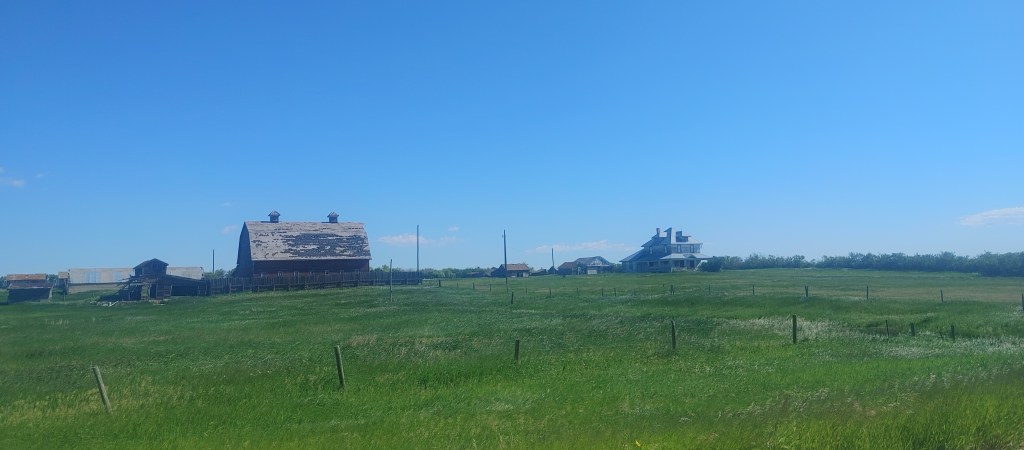
“We don’t even know what to do with so much moisture,” John, one of the farmers we were meeting with, commented as he gestured to the fields of verdant green surrounding us.
Compared to the last half a decade of prolonged drought, having rain every other day in the heart of Canadian cattle country had been unheard of. The usual dry, brownish landscape of crunchy grazing pastures had been transformed to mimic the greenbelt of Ontario. Full of lush, undulated waves of tall grass and healthy sprouts in organized rows lining the hills.
***
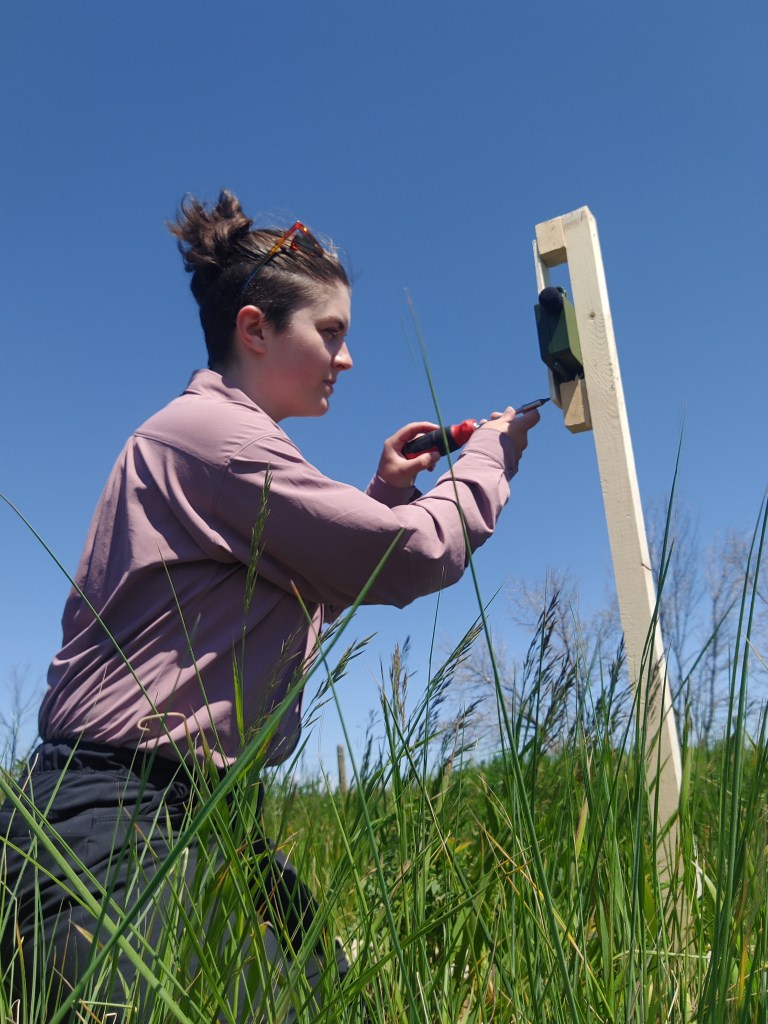
Wednesday and Thursday of this week I spent setting up Automatic Recording Units (ARUs) in some farms around Swift Current, Saskatchewan. The goal of these ARUs is to record birdsong in the area which we then run through an audio analysis program that has been trained to recognized certain bird calls. Mostly, we are looking if any Horned Larks are in the fields that have been graciously lent to us to set up in. There’s a broader goal to the research program that involves some more complex agriculture concepts that I understand enough to explain but only on a surface level.
Essentially, there are different types of fields. Some fields will be cover crops that are grown in a field just to take up space to protect the soil underneath and give it a break from being tilled, seeded, and harvested for whatever bulk of time before its converted back into a cash crop (a crop that can be sold). Cover crops can be monocrop, like Durum wheat which can survive over the winter and keep the soil protected year-round, or they can be poly crop – a mix of different species. Some farms that also have cattle will let their cattle graze these fields as well before large change overs to cash crop or remain as purely grazing ground. Poly crops, with more plant variation, have been studied to be the better of the two as it promotes diversity amongst insects which brings a higher diversity of birds, etc. and is generally better for the soil long-term. Some of these fields will be left to grow untended for years to come (one of the poly crops we setup in wasn’t going to be touched for 10 years which blew my mind the scale of time some of these farmers worked in).
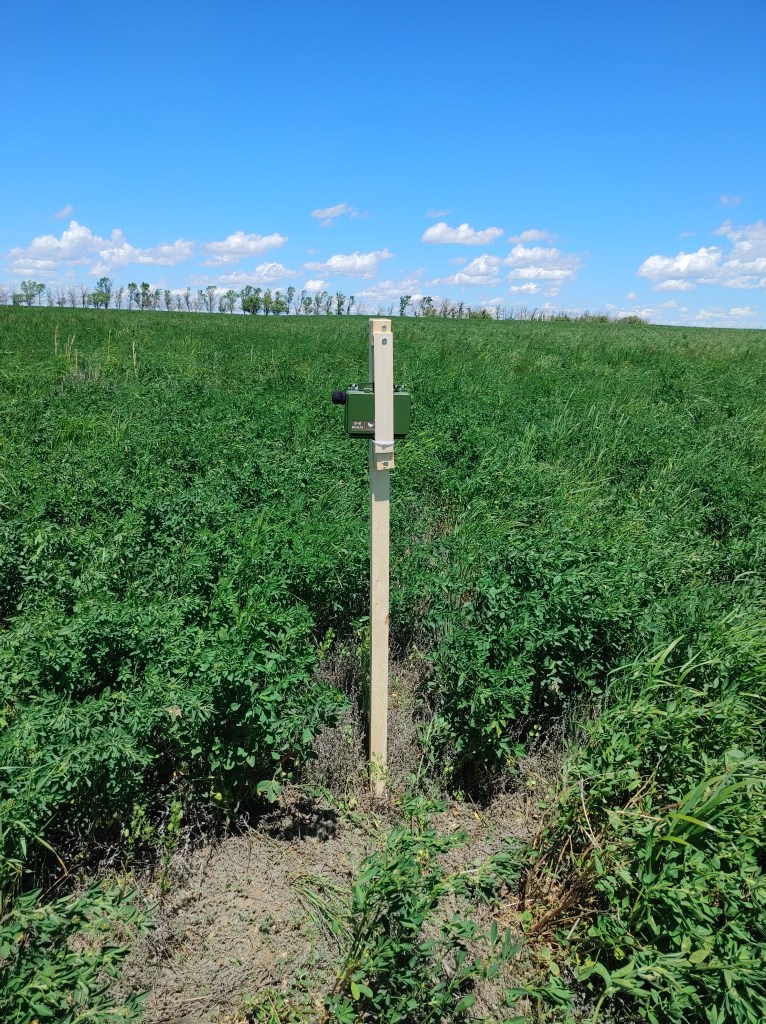
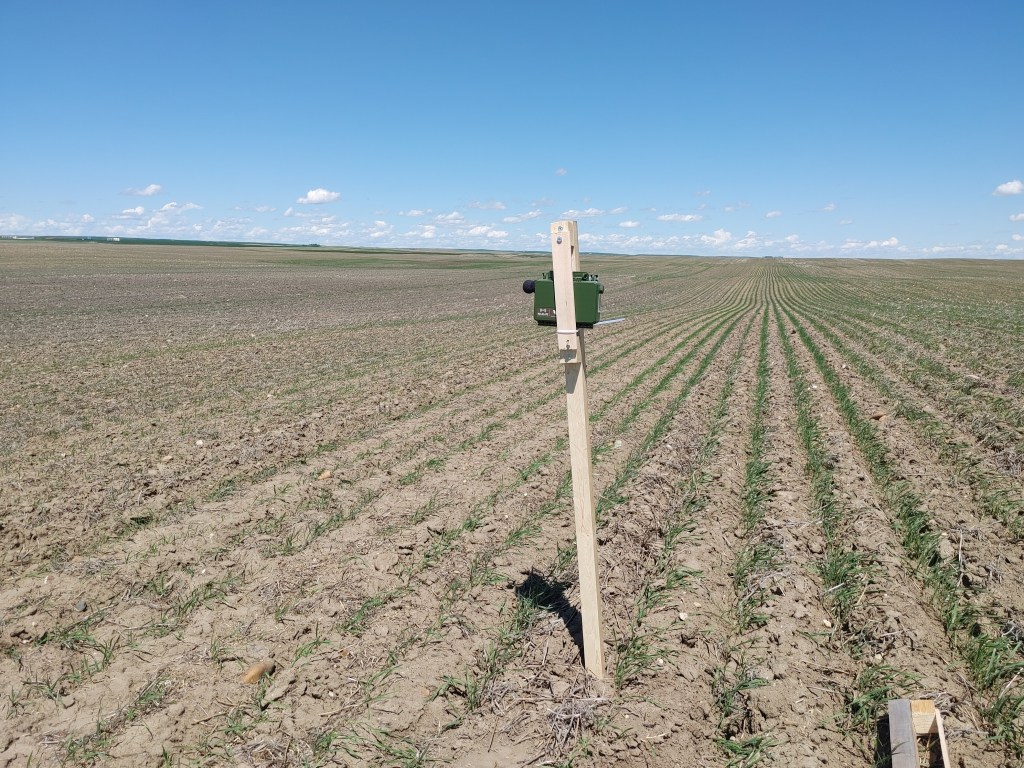
Our ARUs and eventually in person bird survey counts will tell us which birds are found where and in, hopefully, how many numbers to help understand how different crop covers affect local biodiversity particularly in birds but also other species as it is all one big complex web.
All farms are apart of a large network that puts out offers to farmers to have various research take place on their land in exchange for monetary compensation. I was originally expecting the farmers we interacted with to only be in it for the money, as I have come to realize I have a pretty negative view of current industrial agriculture due to poor understanding. However, the first farm immediately demolished many of these pre-disposed notions.
We were greeted at the first farm on Wednesday by a trio of very muddy albeit very friendly farm dogs running from their dingy doghouses to our rental truck, followed by a woman with curly grey hair desperately calling them back. Marla, the wife of the man we were supposed to meet, greeted us as if she had known us her entire life. She ushered us inside, gushing apologies about the state of the kitchen. Honestly, I had no idea what she was talking about until I walked in and had never seen anything quite like it.
It was covered in beef. Cuts of short-rib, flank, loin, and soup bones were wrapped in butchers’ paper and labelled in sharpie cluttered all the available counter space from the kitchen to the wooden dining table. Next to me was a huge clear garbage sac of individual bags of frozen ground beef. This picturesque prairie home had been converted to a butcher’s shop. Marla would explain that they sell cuts of cow in smaller portions (e.g. ¼, or 1/8) than other farms that may only sell down to ½ a cow, and that is has somewhat gotten out of hand with how much interest there has been. She was particularly proud of the sausages that they sell as well.
The kitchen, other than the mounds of frozen meat, reminded me of my cottage with an eclectic collection of model tractors and trucks to a glass cabinet spanning the entire back wall of teacups, family photos, and memorabilia from across the decades. Other than the very modern dishwasher and Marla’s laptop, I had been transported back in time 20 years. Her husband, farmer Kelvin, gestured for us to sit in the mismatching wooden dining room chairs as he wrapped up his phone call.
He then proceeded to enlighten me to the world of holistic agriculture, even on an industrial scale, for the next hour. As much as it was a lecture on soil science and the innerworkings of crop mechanics in conjunction with cattle, it was a history lesson. The prairies had, for the last half a decade, been enduring an awful drought that had scared many out of the cattle and even farming business as a whole. He showed us pictures of his neighbours crops that barely got above ankle high and had been tinged a sickly greenish brown, and then his fields. A variety of vibrant green plants stretched up the calf of Kelvin’s blue jeans in the photo. The time stamp showed these photos were taken only a day apart. They explained that while the initial investment into seed mixes to create large swathes of poly crop for their cattle to graze on was pricey for seeds, in the long run, it was cheaper than any cheap hay to feed their herds. And they were particularly awestruck in the biodiversity that it brought. Their fields were the shiny green oases in a sea of drought-wrecked dead farmland. Something their neighbours, while they could see and touch the results firsthand, still refuse to get behind.
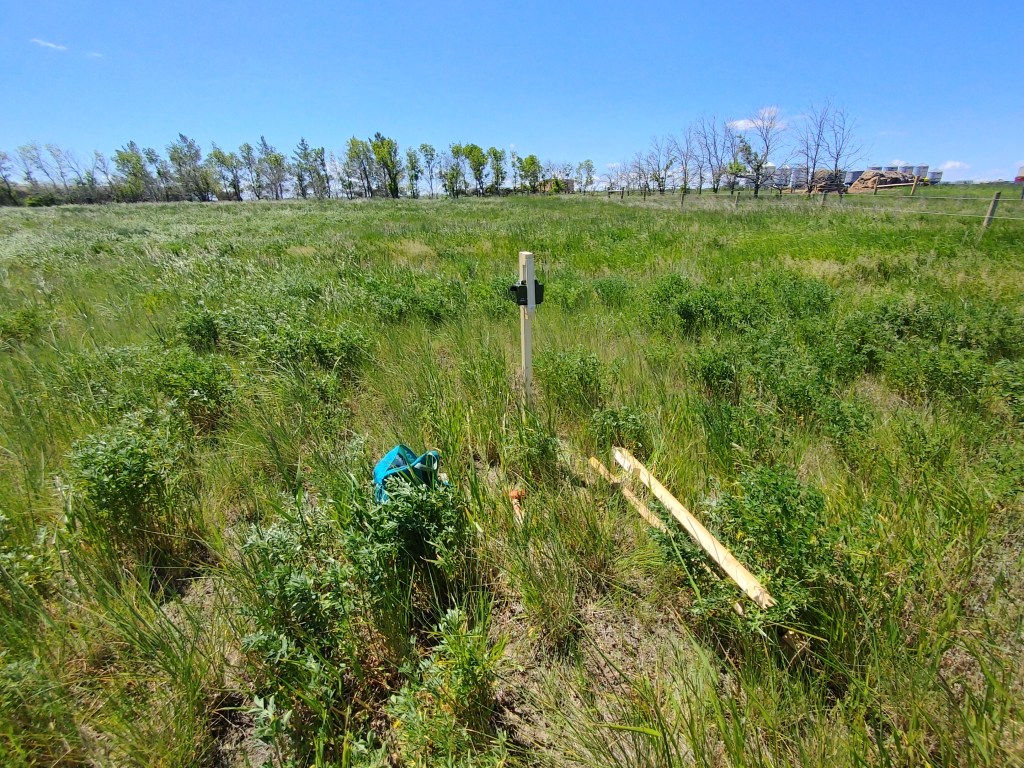
This would be a similar story that the other farmers would share, even if they were not as extroverted and animated as Kelvin, you could tell they had an inherent excitement for the innovative approach and pride for their work. It was awe inspiring and comforting, despite it definitely not being the approach the majority of Canadian farmers are taking.
Some of these ag concepts became clearer once I got into the fields themselves, wooden stake and backpack full of ARU equipment in hand. Nancy, my boss, had fractured her ankle a few weeks ago and would not be joining me but would be cheering me on from our rental pick-up.
Sidenote: 90% of other pick-up drivers will wave at you if they see you in a pick-up on the back roads of Saskatchewan farm country. It’s a weird boys club I never expected to be a part of.
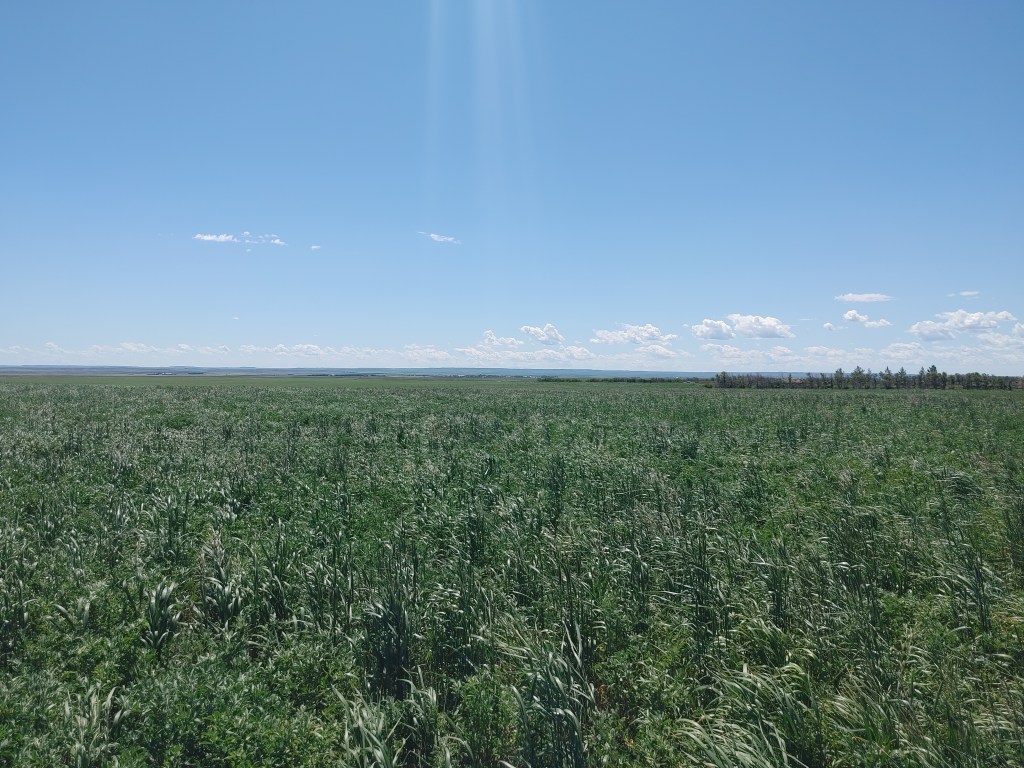
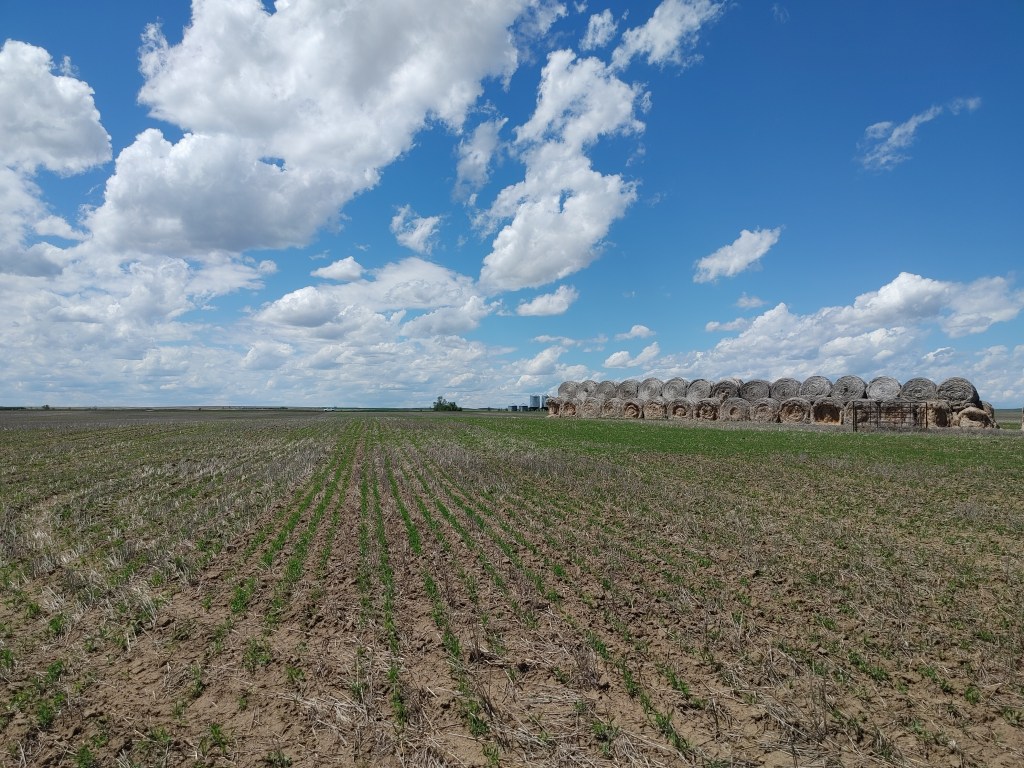
Of course I got my own taste of farm life. Not all of these fields are accessible and google maps does a really shoddy job of navigating through the back grids miles into farm country (not our choice, the navigation was provided to us was incredibly lacking). Over the two days, I saw more ground squirrels scurry across the dirt and gravel roads than I have ever seen (maybe more than regular city squirrels at this point), and birds of prey soar over the rolling hills looking for their next meal (probably the squirrels). Mule deer lazed in whatever shade was available, and cows didn’t seem to care.
I rolled under barbed wire fences, trundled down bumpy private roads, and even became good friends with some of the cows we shared the fields with.
I don’t want to be that girl that says they’ve ‘fallen in love’ with whatever new environment they find themselves to be in, however, I have definitely grown a newfound appreciation, respect, and love for the rolling hills and flatlands of the Canadian prairie as well as the farms that make up the majority of the land. I don’t agree with many of the practices currently being used, but I see the change and I see the drive in the few farmers trying to spearhead the new era of farming that hopes to restore even a little bit of native prairie back that was demolished years ago and continues to be sacrificed.
BTW if I have learned anything out here, it’s that in the future federal election, DO NOT vote for Poilievre. In fact, vote for literally anyone else to make sure your vote nullifies another conservative vote.
You think Canada is already fumbling the ball environmentally? Well it will get a lot worse with someone like him in charge. Over his 20 year career as a Member of Parliament, he has vehemently voted against any sort of pro-environmental bills over 400 times. I’ve seen the damage caused by environmental negligence that has resulted in 99% of native prairie being utterly demolished in favour of black-and-white agriculture that revolves around the idea that man controls the soil, rather than a holistic compromise that fares just the same, if not better, than industrial practices. Those green sprawling hills may look picturesque but they are invasive grasses that maximize productivity in order to feed the millions of cattle across western Canada while providing nothing to the hundreds of struggling native species. Once you destroy that, you can’t go back. There’s a reason grasslands are one of the hardest ecosystems to restore.
 Alert-120
Leave a comment