I glanced down at my GPS hooked to the hip belt of my pack.
35H should be right around here…I thought to myself. It was a nest that I had found a week prior with 3 little lark eggs shaded by a canopy of dry grass. Unfortunately for me, the nest was also built of dry grass, so all the shades of brown really blend in.
“Did you find it?” Ava, my field partner, called from behind me, “Did you want the nest card?” She of course was referring to the drawings we sketch on the back of the nest information cards so we can relocate the nests to check on them, but I was being stubborn.
“No, not yet” I replied. I glanced back down at the GPS. 0m. I’m literally right on top of it.
The GPS units have a 5m range of error, so I started at my feet and slowly scanned the area. Looking for nests can really turn into a needle in a haystack, where said needle is embedded in the ground and full of precious lark babies.
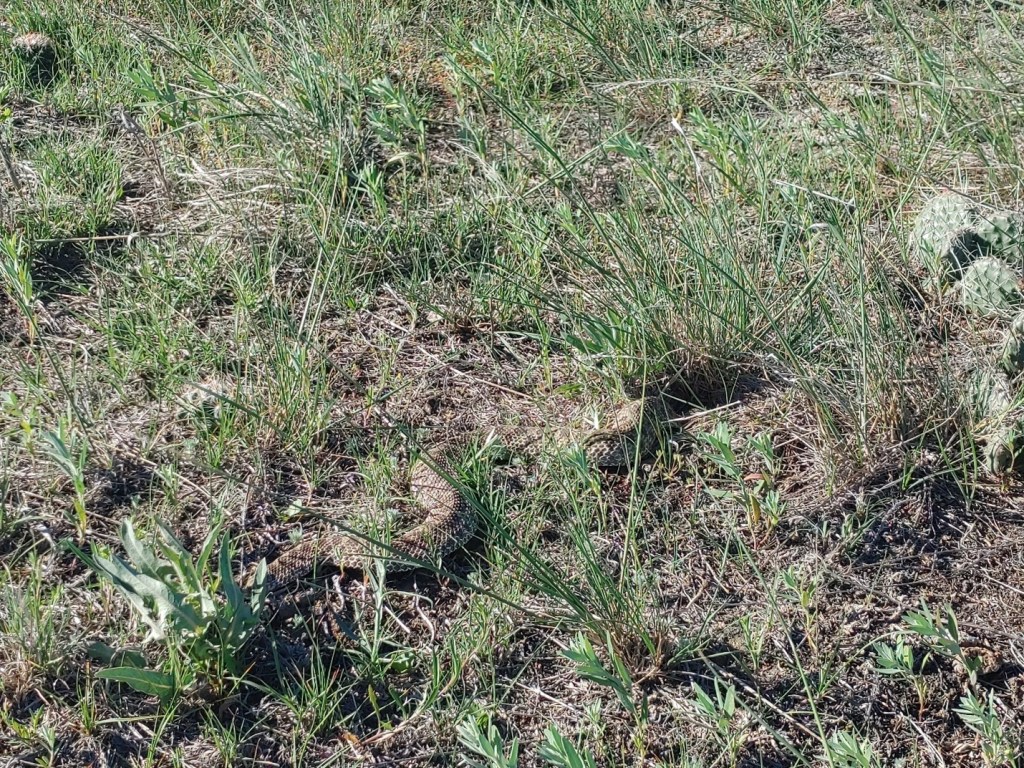
My eyes landed a meter away – a zigzag of tan diamond scales, peppered with dark brown blotches. I followed up its body to where its head was hidden in 35H, throat bulging with freshly hatched chicks. A chill rushed through my body as I took an involuntary step back towards Ava who had made her way towards me.
“Oh my god, Ava, it’s a rattlesnake!” I grabbed onto her arm and pointed to the scene of the crime. Fear was quickly replaced with an adrenaline-rush excitement to witness something so rare – despite the morbidity and clear conflict of professional and personal interest, “This is so sick!”
***
One of the things that I missed big time in Alert was the wildlife. Unfortunately, the bulk of animals and plants in the Arctic only show themselves or make it up so far north in the summer (mainly July and August) which I completely missed in the winter by a long shot. These past few weeks I have gotten a healthy dose of wildlife that I want to share as the prairies are a whole different ball game than that of deciduous and boreal Ontario.
I had a bucket list of animals I was hoping I would be able to see in person out here, without a lot of prior knowledge of how rare/common they’d be (turns out you can see a lot rarer wildlife in fiercely protected areas like the Suffield NWA).
Prairie Rattlesnake
The entire summer at Grundy Lake Provincial Park with numerous visits to Sturgeon Bay and French River Provincial Parks, I had yet to see the elusive Massasauga Rattlesnake. Hell, I even got to see a five-lined skink, Ontario’s only native lizard but I can’t see a damn snake?? So needless to say, I had intended to make it my mission to see the prairie rattlesnake. And so far, I have seen two!
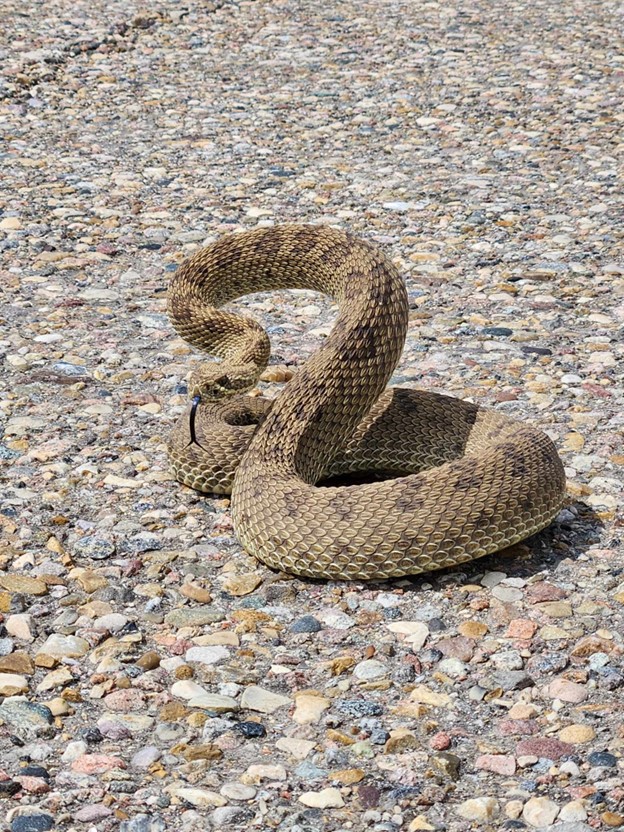
I. Love. These. Guys.
The incredibly defined scales? The upturned snout with the eye ridge that makes them look like they mean business? The blue tongue? This is the perfect snake. This guy was on the road outside of the military base and he was huge! He even showed off his rattle before posting up in front of my coworker David who took the photo while me and Ava stood back and watched.
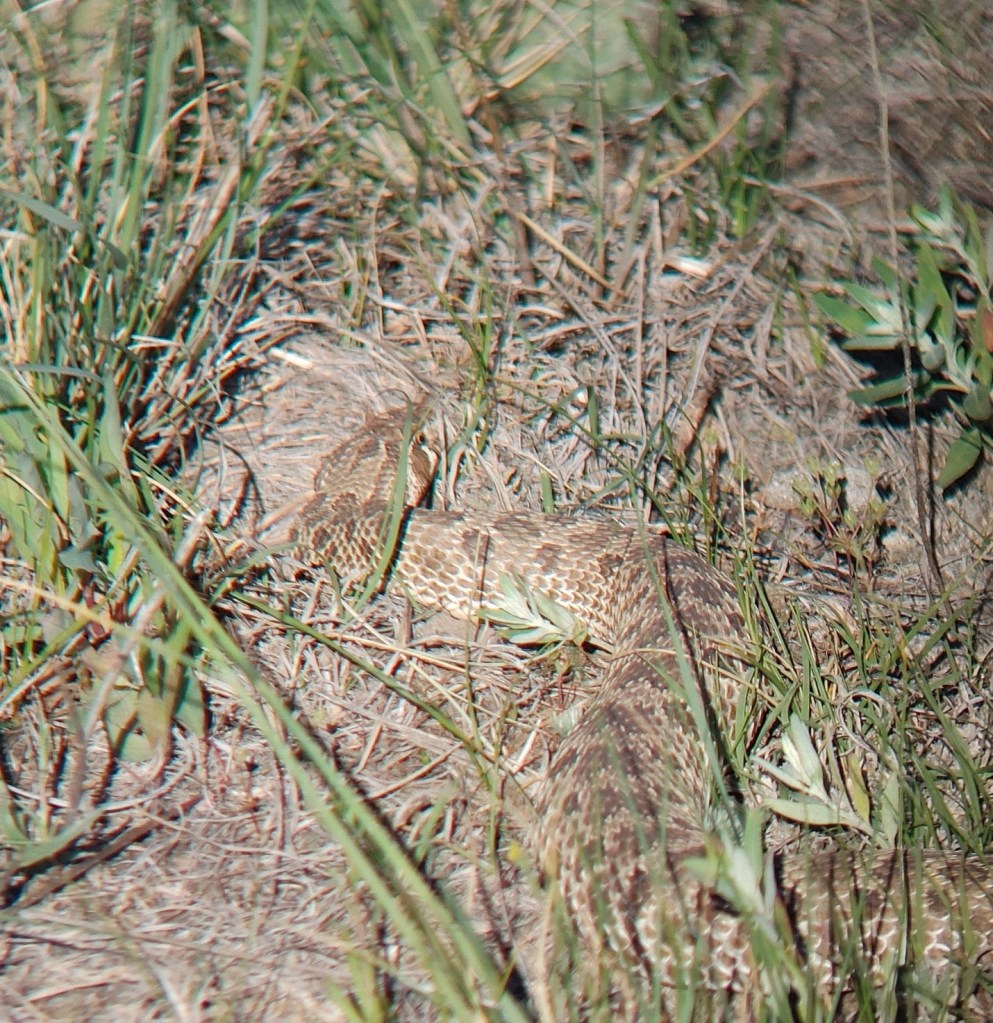
This guy is the snake in the true story above. Rattlesnakes are pit vipers and have specialized heat-seeking organs and venom that helps paralyze prey so they can catch and consume more efficiently. Their venom, of course, is rarely fatal to humans with no recorded cases of death in Alberta. You can imagine being a snake in the prairies that a nest, conveniently on the ground, is a pretty epic find. Hell, you don’t even need to use your precious venom on a harmless nest full of immobile eggs or chicks. When I spotted him, he was completely headfirst in the nest and seemed incredibly sluggish. His rattle had broken off (rattles are made of layers of dead skin that layer on with every molt, but once they get too large, they can break quite easily), though I doubt he even knew I was there to even react. Thankfully.
Burrowing Owls
Now, due to the highly endangered status of Canadian Burrowing Owls compounded with the fact they are protected in the restricted Suffield NWA, I can’t actually show any photos that I have of them on here. You’ll just have to believe me that I have seen them.
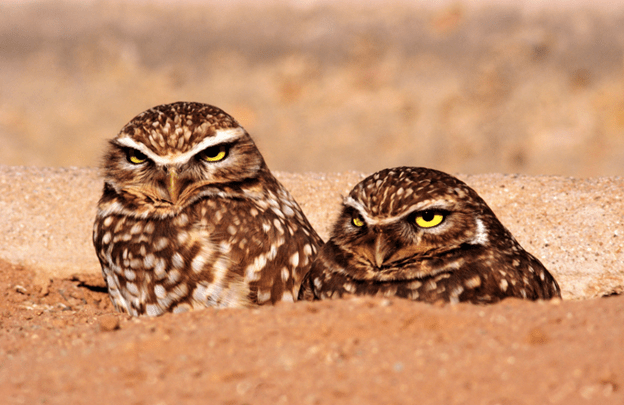
^Burrowing Owls on NatureCanada
Burrowing Owls, despite their name, don’t do much burrowing of their own. Instead, they usually take over abandoned coyote, fox, prairie dog, and ground-squirrel burrows and they prefer shortgrass prairies where there is an abundance of free real estate. These owls will migrate far south into the southern United States where they are surprisingly, incredibly common (especially in Texas and Florida). They’re usually pretty lazy fliers though and even if they’ve set up shop in Alberta, once they migrate south, they may not feel like making the journey back and if they find a good den along the way, they stay there, making Canadian conservation efforts pretty fruitless at times.
There is a multitude of factors that have led to the devastating decline of these owls in Canada including loss of habitat due to agriculture and urban development, habitat fragmentation (by the same causes), road mortality, pesticides, and lack of food.
The Burrowing Owls in that photo look really majestic. I find sometimes they look a little like old men reincarnated as owls. The few that I have seen like to sit and stare without moving much. And I mean stare as in the judgemental, cautious stare that only senior citizens seem to do really well.
Pronghorns
Pronghorns are to Alberta what deer are to Ontario. They are everywhere, at least near Suffield. They don’t really seem to belong in a typical Canadian stereotype of wildlife, looking more like they escaped from the African Lion Safari however it is important that everyone knows of the long, complex, and incredibly pertinent history the pronghorn has to various indigenous peoples in the prairie regions of Canada. And, also, they have absolutely no genetic connection to antelopes.

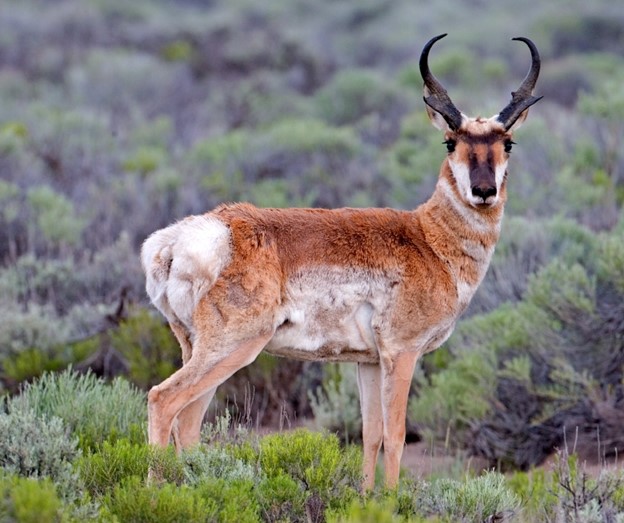
^Pronghorn photo off Wikipedia
Pronghorns really like to watch us from afar. Like super far (their eyesight is incredible). The males will chuff and circle, sizing you up from the tops of hills before realizing you’re probably not a threat and quickly scaring off. They are the fastest land animal in North America, clocking up to 100km/hr and while that may not be as fast as a cheetah, they can certainly run for longer. They also migrate quite far, holding the title of second farthest land animal migration next to the caribou.
***
Those three made up the bulk of my ‘Must See’ list, but I have seen many other cool things that I added posthumously. The last two animals I want to see before leaving is the Swift Fox (previously declared extinct yet through tremendous conservation effort has been brought back to a small segment of prairie habitat), and the Northern Scorpion (not rare, I just want to see one).
White-Tailed Jack Rabbit
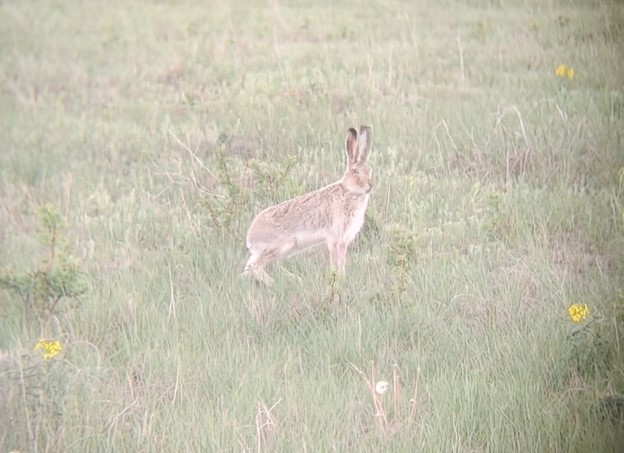

^Picture of Jackrabbit off Nebraska Gov. site
Jackrabbits like to hide in the tall grass and then hop away, scaring the crap out of you. Gone are the days of the cute arctic hares – these guys are terrifying, and I can see why creepy hares have become such a common trope in horror.
Long-tailed Weasel (photos by David Bell)

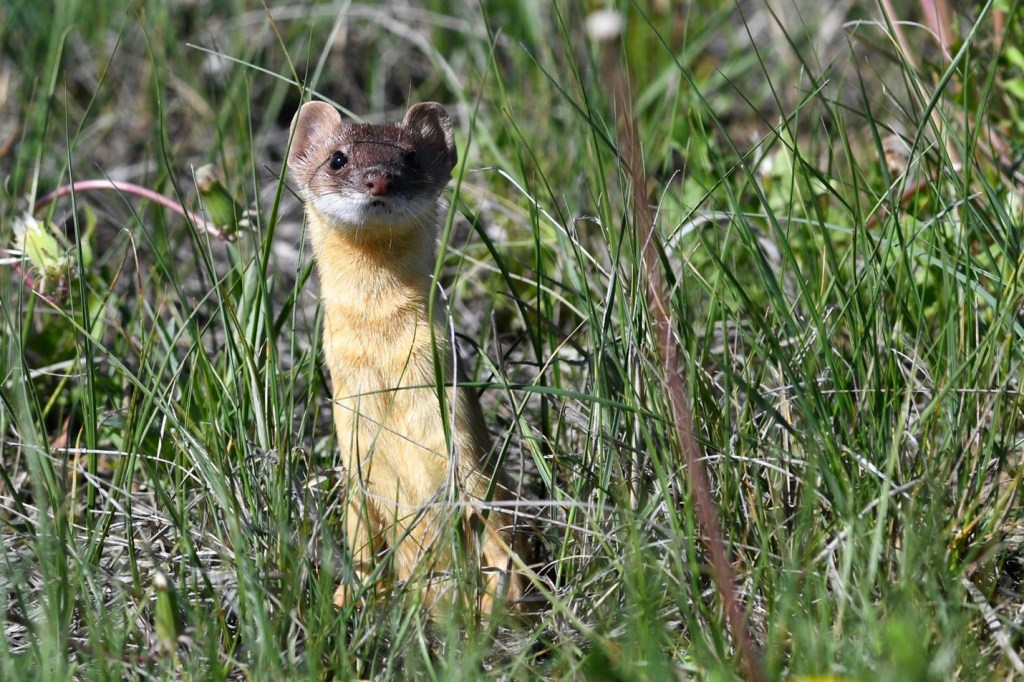
So cute, right? WRONG. These guys eat a ton of nests and make our lives more difficult. Surprisingly, this weasel hadn’t snuffed out the chestnut-collared longspur nest right next to his burrow.
Porcupine
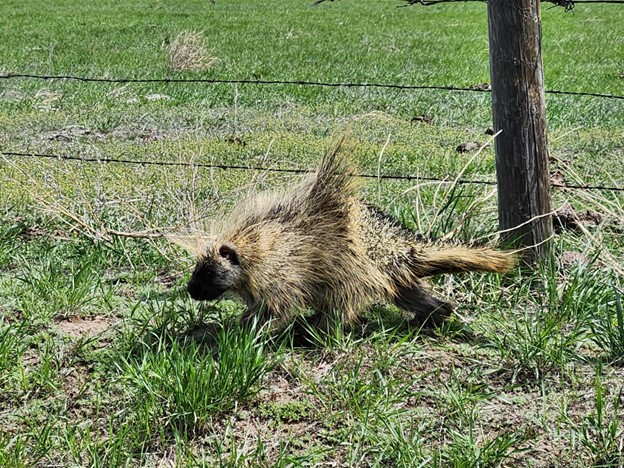
I’ve never seen a porcupine in the wild and they are much weirder looking than I was expecting. They like to hang out in culverts.
***
You can make this blog post into a drinking game. Take a shot every time you read the word ‘incredible’ or ‘incredibly’. Truly, I think prairie wildlife is just INCREDIBLY cool and want to share this excitement with whoever is interested. The prairie is full of adaptations to deal with the unique landscape and everywhere you look is a marvel of evolution to be suited to a treeless, arid, and unforgiving landscape where sometimes, the survival of one directly relies on the survival of another.


 Alert-120
Leave a comment